Magic in Andórë
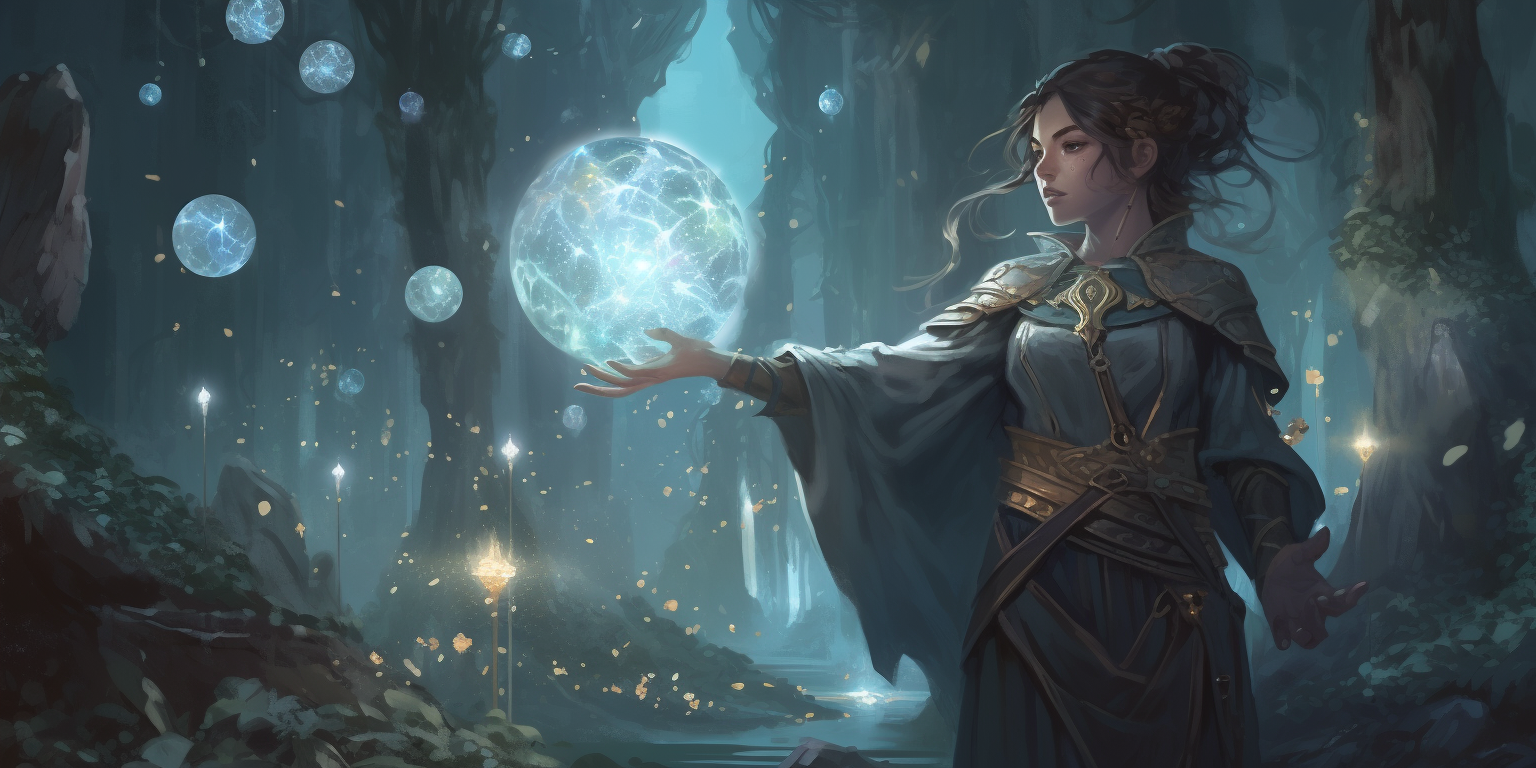
The Aether of magic is a natural yet wondrous and sometimes daunting force that permeates the cosmos. It flows through the relics of legendary heroes, the ruins of fallen empires, and even those touched by the gods themselves. Tales of magic and its wielders are woven throughout the histories and stories of our people.
However, the common knowledge of magic among regular folk can vary greatly, dependent upon their place of origin and their personal experiences. In the isolated hamlets of Andórë, it is not uncommon for generations to pass without any firsthand encounters with true magic. They may speak in hushed whispers of the old hermit living in the nearby woods, rumored to possess strange and powerful abilities.
But in the bustling city of Reiqua, located in the Kingdom of Oreinerius, the Crystal Tower stands as a beacon of magical knowledge and accessibility. The arcanists of the Tower seek to share their expertise with the world, offering their services and making the wonders of wizardry more widely available.
Aether
The Aether, as we know it, is the energy force that suffuses the universe and fuels all magic. It is a natural force, one that is both wondrous and powerful, yet also mysterious and sometimes frightening. Aether is the lifeblood of magic, and it flows through all living things and the world around us.
In Andórë, we have long studied the Aether and its properties, seeking to understand its nature and harness its power. We know that the Aether is not something that can be seen or touched, but it can be felt and manipulated by those who are attuned to it. It is the very essence of magic itself, and it is what allows us to cast spells, create magical artifacts, and bend the world to our will.
The Aether is a force that permeates the cosmos, moving through ancient relics of legendary heroes, the ruins of fallen empires, and creatures born with supernatural power. It is a force that is both ancient and eternal, and it is present in all things.
For those who study the Aether, its power is both a blessing and a curse. We know that magic can be used for great good, but it can also be used for great evil. As practitioners of magic, it is our responsibility to use our knowledge and power wisely, always keeping in mind the potential consequences of our actions.
The first method of accessing Aether is through the Arcane. Arcane spellcasters directly tap into the raw energy of Aether and manipulate it to their will. Wizards and sorcerers are often the most skilled at this method, as they study and practice the art of manipulating Aether to cast spells and create magical effects.
The second method is through the Divine. Deities grant their most devout followers access to Aether, allowing them to wield divine magic. Clerics and paladins are often the most skilled at this method, as they channel the divine power of their gods to cast spells and perform miracles.
The third and final method is through the Natural. Those who have a deep connection to the natural world can access Aether in a unique way. Druids, rangers, and shamans are often the most skilled at this method, as they use their connection to the natural world to cast spells and call upon the power of the elements.
Each of these methods of accessing Aether is unique and powerful in its own way. They all require a great deal of practice, skill, and dedication to master, but those who do are able to wield incredible power and make a significant impact on the world around them.
Divine Influence on Aether
The gods of Andórë have significant control over Aether and its use in magic. Greluna, Hykteus, and Atdite are considered the primary deities with dominion over Aether, and as such, they hold great sway over the way magic is practiced and utilized by mortals.
The gods may restrict access to certain powerful spells or abilities that could be used to harm or challenge them. For example, if a mortal were to attempt to cast a spell that directly attacked or threatened a god, it would likely be prevented by divine intervention. Similarly, spells or abilities that would allow a mortal to manipulate or control a god would likely be restricted or inaccessible.
Furthermore, the gods may grant certain mortals access to specific spells or abilities as rewards for devotion or service. For instance, a cleric who serves the god of medicine, Conlo, may be granted access to powerful healing spells or abilities that are not available to other mortal spellcasters.
The governance of certain spells and abilities may vary from deity to deity, as each has their own unique domains and areas of influence. For example, the goddess of order, Ara, may restrict access to spells that disrupt or challenge the lawful order of society. In contrast, the god of the hearth, Cuulla, may govern spells related to the nurturing and protection of families and households.
Intro to Magic, a lecture by Astrum Starwearer
Astrum stood at the front of the room, her hands clasped behind her back as she surveyed the group of novices before her. They were a diverse group, hailing from different backgrounds and regions, but all shared a common interest in the art of magic.
"Welcome, my young apprentices," Astrum began, her voice clear and resonant. "Today, we will begin our exploration of the Aether, the very essence of magic itself."
She gestured to a large diagram on the wall behind her, which depicted the intricate flow of Aether throughout the world. "As you can see, the Aether permeates all things, moving through the air, the earth, and even our own bodies. It is the energy that fuels all magic, and it is our job as practitioners of the arcane arts to harness it."
Astrum paused, allowing her words to sink in. "But let me be clear, magic is not something to be taken lightly. It is a gift, but it is also a responsibility. We must always be mindful of the consequences of our actions and use our powers wisely."
She paced back and forth as she spoke, her eyes flickering with intensity. "There are three primary methods of accessing the Aether: the Arcane, the Divine, and the Natural. Each method is unique and powerful in its own way, and each requires a great deal of practice and dedication to master."
Astrum went on to explain each of the three methods, outlining their strengths and weaknesses, and offering examples of famous practitioners throughout history.
"Now, as you begin your studies, you may find yourself drawn to one method over the others. That is perfectly natural, and it is important that you follow your instincts. But I urge you not to limit yourselves. The true power of magic lies in its diversity and versatility. By studying all three methods, you will become a well-rounded and formidable practitioner."
She leaned in, her eyes sparkling with excitement. "But enough talk. The truest way to understand magic is to experience it firsthand. So let us begin our journey into the Aether, and see where it takes us."
Spells
Spells are the most common, and often the most potent, form of Aetheric expression. A spell is a fascinating and potent thing, born of the intricate weave of Aether that pulses through our world. When one wishes to cast a spell, they must reach out and touch the strands of Aether around them, gathering and shaping them into a specific pattern. It is a delicate dance, one that requires patience and skill to perform successfully.
Once the strands are gathered and shaped, they are set in motion and released to create the desired effect. In a matter of moments, a spell can cause great harm or mend that which is broken, shape the elements to the caster's will or bring the dead back to life. The potential uses of a spell are vast and varied.
Countless spells have been created over the course of history, and many have been lost to the ravages of time. But the knowledge of these spells might yet be waiting to be discovered, hidden in dusty tomes or locked in the memories of those who have long since passed away. It is the role of the ambitious and the wise to seek out these lost spells and breathe new life into them once more.
Spell Potency
The spells in the world of magic are cataloged by the Crystal Tower in Reiqua and are classified into nine different levels of power. Each spell is assigned a level from 0 to 9, indicating how potent it is. The simplest and easiest spells to cast are cantrips, and they are classified as level 0. Spells become increasingly powerful as their level increases, with the mighty wish spell being the most powerful at level 9. Mastering spells of higher levels requires more time and effort than lower-level spells, and it is essential to learn the basics before moving on to more advanced magic. So, it is vital to take the time to learn the fundamentals and build a strong foundation before delving into more powerful spells.
Long ago, spells were categorized up to 11 levels, each indicating a higher degree of power and complexity. However, after The Descent of the Drow, when the dark Elves were cursed by the gods, the gods Hykteus and Greluna made a decision that would forever change the nature of magic.
They blocked mortals from accessing spells of 10th and 11th level, and the reasons for this decision are shrouded in mystery. Some say that mortals had become too powerful and were using these spells for nefarious purposes, while others believe that the spells themselves were too dangerous to be wielded by mere mortals.
Whatever the reason, the decision had a profound impact on the practice of magic. It forced wizards and other spellcasters to focus on mastering the spells that were available to them, rather than seeking to unlock even greater power. And it ensured that the balance of power between mortals and the gods remained intact.
Since that day, no mortal has ever successfully cast a 10th or 11th level spell, and it is widely believed that such spells are beyond the reach of mortals. Nevertheless, there are those who continue to search for ways to access these ultimate spells, driven by curiosity, ambition, or sheer hubris. But they do so at their own peril, for the gods do not take kindly to mortals who seek to surpass their limits.
Spell Classification
Spells are powerful, but not all magic is created equal. Each spell belongs to a specific category or school of magic: Abjuration, Conjuration, Divination, Enchantment, Evocation, Illusion, Necromancy, and Transmutation. By categorizing spells into families, spellcasters can better understand their magical capabilities and limitations.
- Abjuration spells protect the caster and their allies by creating magical barriers or warding against harmful effects. Some abjurations can even banish creatures to other Planes of Existence.
- Conjuration spells focus on transporting objects and creatures from one location to another. Summoning creatures, teleportation, and creating objects or effects out of nothing are all examples of conjuration magic.
- Divination spells reveal hidden information, such as forgotten secrets or glimpses of the future. They can also be used to locate hidden objects, see through illusions, or gain insight into distant people or places.
- Enchantment spells influence or control the behavior of others. They can make enemies see the caster as a friend or control another creature like a puppet.
- Evocation spells manipulate magical energy to produce a desired effect. Whether it's a blast of fire or healing energy to mend wounds, evocation spells can be incredibly powerful.
- Illusion spells deceive the senses or minds of others. They can create phantom images that any creature can see or plant an image directly in the mind of a creature, making them believe something that is not true.
- Necromancy spells manipulate the energies of life and death. They can grant extra life force, drain the life energy from another creature, create undead creatures, or even bring the dead back to life.
- Transmutation spells alter the properties of creatures, objects, or environments. They can turn an enemy into a harmless creature, enhance the strength of an ally, move an object at the caster’s command, or rapidly heal a creature’s injuries.
Astrum's Intro to Magic, Part 2
Now that we have an understanding of the different categories of spells, let us dive deeper into the study of magic. Magic is a vast subject, and there is always something new to learn. As I mentioned earlier, magic is the most potent expression of Aetheric energy, and it requires a great deal of skill and concentration to wield.
The first step to mastering magic is to develop a strong foundation of knowledge. This includes understanding the different categories of spells and their properties, as well as the basics of Aetheric energy and how it flows through the world. Without this foundation, you will struggle to cast even the most basic spells.
Once you have a solid understanding of the fundamentals, you can begin to study more advanced techniques and spells. This is where things start to get exciting. Advanced spells can be incredibly powerful, allowing you to do things like manipulate the elements, summon creatures from other planes, or even alter reality itself.
However, it is important to remember that with great power comes great responsibility. Magic is a potent tool, but it can also be dangerous if wielded improperly. It is essential to approach magic with respect and caution, always keeping in mind the potential consequences of your actions.
Another crucial aspect of mastering magic is developing your own personal style. Each spellcaster has their unique way of casting spells, their own signature style that sets them apart from others. This style can be influenced by many factors, such as your personality, your upbringing, or even the type of magic you practice. Developing your own style can take years of practice and experimentation, but it is well worth the effort.
Magic is a fascinating subject that requires patience, dedication, and a willingness to learn. With a strong foundation of knowledge, a willingness to experiment and develop your own personal style, and a healthy dose of caution, you can master the art of magic and wield incredible power to make a difference in the world around you. So, let us continue to study and explore the mysteries of magic, always striving to unlock its full potential.
Non-Spell Uses of Aether
While spells are the most commonly recognized way that magic and Aether are used, there are also other non-spell uses for these forces. For example, certain enchanted items like a magic sword or a ring of protection are imbued with magical energy that enhances the abilities of the wielder. Magical energy can also be used to create golems, animated constructs made of various materials that can be programmed to perform specific tasks. Additionally, magic can be used to create portals or gateways to other Planes of Existence, allowing travel beyond the boundaries of the physical world.
Another non-spell use for magic and Aether is through rituals and ceremonies. These can be religious or secular in nature, and may involve calling on the power of specific deities or otherworldly forces. Such rituals can have a wide range of effects, from summoning powerful beings to granting boons or curses to those who participate.
Lastly, the raw power of Aether itself can be harnessed for various purposes. Those with the knowledge and skill to manipulate Aether directly can use it to power magical devices, create energy fields, or even imbue living creatures with temporary enhancements. The uses for Aether are truly limitless, limited only by the creativity and knowledge of those who seek to harness its power.
Enchanting Items
Harnessing Aether to enchant an item requires a skilled mage or enchanter to gather and manipulate the raw magical energy. The process typically involves the following steps:
1. Gathering Aether: The mage or enchanter must first gather Aether from their surroundings, either by drawing it in from the environment or from a nearby Aether source. This requires a deep understanding of how Aether behaves and can be manipulated.
2. Focusing the Aether: Once the Aether has been gathered, the mage or enchanter must focus it into a specific form or pattern. This involves visualizing the desired outcome and channeling the Aether energy accordingly.
3. Binding the Aether: The next step is to bind the Aether to the item to be enchanted, such as a sword or boots. This is typically done by using a binding spell or by inscribing magical runes or symbols onto the item.
4. Activating the Enchantment: With the Aether bound to the item, the mage or enchanter must then activate the enchantment. This is typically done through the use of a trigger mechanism, such as a spoken word or physical gesture, which causes the Aether energy to be released and the enchantment to take effect.
Once the enchantment has been activated, the item will typically possess new magical properties or abilities, such as increased strength or protection, or the ability to cast spells or manipulate Aether energy. The enchantment will usually last for a certain duration, depending on the strength of the Aether used and the skill of the mage or enchanter.
Astrum's Intro to Magic, Part 3
Magical enchanting is a fascinating and potent way of using Aetheric energy. It involves imbuing an object with magical properties or abilities, making it more powerful or useful. Enchanting can be done on various objects, including weapons, armor, jewelry, and other items.
The process of enchanting requires skill, knowledge, and patience, as the enchanter must gather and manipulate Aether to imbue an item with magical properties. This can be a lengthy and challenging process, but the rewards are significant.
Enchanted items can provide the user with increased strength, protection, or other benefits. For example, a sword might be enchanted to deal extra damage to undead creatures, or a ring could be imbued with magical energy to provide the wearer with enhanced agility or speed.
Enchanting also allows for the creation of unique and powerful artifacts, such as the legendary Sword of Light or the Staff of the Archmagi. These items are often created through a combination of magical enchanting and other arcane methods, such as the infusion of powerful spirits or the use of rare materials.
One of the challenges of enchanting is finding the right balance between power and control. Too much Aetheric energy can cause an item to become unstable, while too little can result in an enchantment that is weak or ineffective. Experienced enchanters must know how to balance these factors to create an item that is both powerful and stable.
Practitioners of Aetheric Magic
While many people are able to manipulate Aether to a certain extent, there are those who are born with an innate talent for accessing and wielding the magical force. These individuals, known as artificers, bards, clerics, druids, sorcerers, warlocks, and wizards, possess the ability to shape Aether into spells and magical effects with greater ease and power than the average person.
Artificers are masters of crafting and creating magical items, using their knowledge of Aether to imbue objects with extraordinary abilities. Bards channel the power of Aether through their music and performances, able to charm or inspire those around them with their magic. Clerics are the devout followers of the gods, able to access the divine power of Aether through prayer and devotion to their chosen deity. Druids draw on the power of nature to cast spells and shape the world around them. Sorcerers possess an innate talent for Aetheric magic, able to conjure spells and manipulate the elements with ease. Warlocks have made a pact with a powerful being or entity, gaining access to their Aetheric power in exchange for service or favors. Wizards are the scholars and researchers of Aetheric magic, spending years studying the intricacies of the magical force and mastering its power through rigorous study and practice.
While the average person may be able to access and manipulate Aether to a certain extent, these individuals possess a greater connection to the magical force, allowing them to shape and wield it with greater precision and power.
Astrum's Intro to Magic, Part 4
In addition to the various practitioners of Aetheric magic, there are also those who have developed unique approaches to accessing and wielding the magical force. Some of these individuals include alchemists, who use their knowledge of chemistry and natural substances to create potions and elixirs with magical properties; psions, who access Aetheric power through their own mental abilities, such as telekinesis and telepathy; and mystics, who delve into the deeper mysteries of the Aether to access powerful and esoteric magic.
No matter their approach, all practitioners of Aetheric magic share a deep respect and understanding of the magical force. They recognize the inherent power and danger of Aether, and understand that the pursuit of magical knowledge and power is not without risk. However, for those who are willing to devote the time and effort necessary to master the intricacies of Aetheric magic, the rewards can be great indeed.
As we continue to delve deeper into the world of magic, I encourage each of you to approach the study of Aether with a sense of wonder and reverence. The power of magic is not to be taken lightly, but with dedication and a humble respect for its awesome potential, each of you has the potential to unlock its secrets and wield its power to great effect.
Magical Education
In the great nations, there are many formal institutions that teach the manipulation of Aether through many different traditions.
- Kan'tasian Empire: The education system in the Kan'tasian Empire is focused on shamanistic practices and the study of magic, with all citizens expected to learn the basics and those with exceptional talent or promise attending prestigious shamanic circles for advanced training.
- Kingdom of Druvavarbia: The Aquamancy Academy, located in the coastal city of Marate, specializes in teaching advanced water manipulation and storm magic to gifted students.
- Kingdom of Oreinerius: Magical education is governed by the Triad Arcanum, housed at the Crystal Tower in Reiqua. It teaches Arcane, Divine and Natural magic.
- Rihian Republic: While the Republic has many advanced universities including the University of Arcanum, Institute of Mathematical Sciences, College of Elemental Studies, and Academy of the Celestial Arts.
- Thylalyrian Confederation: The Confederation is dotted with temples, all of which will train students in the use of Divine magic.
- Tribes of Bhogru: Magical education in the Tribes is taught with a master-apprentice relationship, focusing on shamanism.
- United Kingdoms of Bizad: The Kingdoms have several prestigious magical academies including the Arcane Conservatory, the Shadowed Academy, and the College of Enchanting Melodies.
- Velhelsinese Empire: Magical education in the Empire is handled through military academies throughout the nation.
Manifestation
Verbal, material, and somatic components are the fundamental tools that spellcasters use to manipulate the Aether and create magical effects. Each of these components plays a unique role in the casting of a spell.
Verbal components involve the use of spoken incantations or chants. These are specific phrases or words that are recited by the caster to focus their mind and direct the flow of Aether. Verbal components are essential to most spells, as they provide the caster with a mental anchor and help them to visualize the desired effect.
Material components involve the use of physical objects or substances that are consumed or manipulated during the casting of a spell. These components can take many forms, from bat guano and sulfur for a fireball spell, to a diamond worth thousands of gold pieces for a resurrection spell. The physical objects used as material components act as a conduit for the caster's will, allowing them to draw on the power of the Aether and shape it to their desires.
Somatic components involve specific hand gestures or movements that the caster makes during the casting of a spell. These movements are carefully choreographed to direct the flow of Aether and shape it into the desired effect. Somatic components often involve intricate hand movements, but they can also include full-body gestures or even dance-like movements. These gestures help to focus the caster's mind and provide a physical representation of the spell's intent.
Together, verbal, material, and somatic components form the backbone of spellcasting, allowing spellcasters to manipulate the Aether and create powerful magical effects. Each component is essential in its own way, and skilled spellcasters must master all three to become truly powerful wielders of magic.
As an example, to cast Fireball, a spellcaster must first verbally incant the spell, speaking the words of power that evoke the spell's intended effect. They must also make specific gestures, or somatic components, with their hands and body to shape the flow of Aether into the desired form.
Finally, they must have the necessary materials, in this case a tiny ball of bat guano and sulfur. When the spellcaster has all of these components at the ready, they bring them together, drawing upon the Aether to create a spark that ignites the bat guano and sulfur, creating a fiery explosion that engulfs the area.
The combination of these three components is crucial to the successful casting of Fireball, as each component plays a role in shaping and directing the flow of Aether to create the desired effect. Without any one of these components, the spell may fail or manifest in unintended ways.
Astrum's Intro to Fireball
Now, let's talk about how to cast one of the most iconic spells in all of magic: the Fireball spell. To cast this spell, you will need to gather and shape Aetheric energy into a ball of flame that explodes upon impact.
The verbal component for this spell is "Ignis!" which is Ignan for "fire". The purpose of this verbal component is to focus your mind and intentions on creating a ball of flame.
Next, you will need to perform the somatic component of the spell. This involves drawing a circle with your closed right hand and then extending your fingers as the circle finishes, as if your hand is exploding. This motion is used to shape the Aetheric energy into a ball and ignite it with your own will.
Now, on to the material component. You will need a small ball of bat guano and sulfur, which are used to provide the fuel for the fireball and help focus the Aetheric energy into the desired form.
Once you have gathered your Aetheric energy, spoken the verbal component, and performed the somatic component, you will need to release the energy to create the fireball. This is typically done by pointing your hand towards the desired target and releasing the Aetheric energy.
I cannot stress enough that casting spells can be dangerous, and should only be attempted by those who have studied and mastered the intricacies of Aetheric magic. A mispronounced word, an incorrect gesture, or a mismanaged release of Aetheric energy can have disastrous consequences. So, be sure to approach the casting of spells with the utmost care and respect for the power you wield.
Localization
Aether is a force that flows through the multiverse, but its flow can be disrupted in various ways, resulting in areas where magic functions abnormally. The most well-known of these areas are anti-magic zones, where the energy of Aether is completely suppressed, and null-magic zones, where the flow of Aether is severely restricted.
But there are other magical zones to be aware of. In wild-magic zones, Aether is highly unstable, leading to unpredictable and amplified spell effects. Magic vortexes, on the other hand, concentrate Aether, providing a high concentration of magical energy that can be harnessed for powerful spells.
In addition to these, there are also dead magic zones where all magic is suppressed, and spells fail to work. Shadow magic zones, where magic is corrupted by the Shadowfell, can cause spells to have unpredictable or dangerous effects, and elemental magic zones, where the elements are infused with strong magic, can enhance spells related to the corresponding element while weakening or disrupting spells of opposing elements.
Lastly, planar magic zones have thin barriers between different Planes of Existence, allowing planar creatures to pass through and spells that manipulate planar energy to work more effectively. However, they can also be dangerous, attracting unwanted attention from extraplanar entities.
As a wizard, I have extensively studied these phenomena, and it is crucial for all magic-users to be aware of their surroundings and potential presence of these zones, as they can greatly impact the success and safety of their magical endeavors.
Previous Article: Nature Is Its Own Force
Next Article: Calendar