The Battle of the Sanctum
The Battle of the Sanctum was a legendary event in the divine realm of Aralonia, a cosmic battle between two powerful deities, Ara, the Goddess of Honor, and Ubus, the God of Vengeance. Ubus, with the aid of his powerful Shadow Serpent, Vengazara, infiltrated Ara's inner sanctum in Aranor, hoping to strike a devastating blow to the Goddess of Honor and tarnish her reputation. However, the battle did not go as planned for Ubus, as Ara and her ever-watchful companion, Vigilance, proved to be formidable opponents. The battle marked a significant defeat and shame for Ubus, affecting his mental state and outlook as a god of vengeance. The Battle of the Sanctum remains a testament to the triumph of honor, light, and loyalty over vengeance, darkness, and deception in the divine realm of Aralonia.
In Aranor's sanctum, where honor reigns, Ubus and Vengazara plotted dark gains. Their goal: to strike a devastating blow, And tarnish Ara's image, her reputation, so.
With stealth and deception, they slipped through the gates, Moving with calculated steps to their fateful fate. But Ara was not alone, her loyal Vigilance nearby, Alerting her to danger with a low, guttural cry.
Ubus and Vengazara emerged from the shadows, Their eyes blazing with malice, their intent to overthrow. Ubus unleashed a torrent of curses and dark energy, While Vengazara slithered forward with deadly brevity.
But Ara and Vigilance were not to be taken down, Their divine reflexes and sheer strength made them renown. Vigilance's massive claws and roars shook the sanctum, While Ara's sword Aetherion deflected each dark phantasm.
The battle raged on, neither side gaining an edge, The sounds of clashing swords, venomous hisses, and celestial pledge. As both sides grew tired, their movements slowed, Each strike more decisive, as they sought to deliver the final blow.
But Ubus and Vengazara knew they could not withstand, The combined strength of Ara and her loyal band. They retreated, Ubus casting curses and dark energy, Covering their escape, while Vengazara moved through shadows nimbly.
Ara and Vigilance pursued, but Ubus and Vengazara were gone, Back to their own realm, their attack defeated and withdrawn. The battle of the sanctum, a legendary tale of victory, Symbolizing the triumph of honor, light, and loyalty.
~Eryndor
Summary
During the Battle of the Sanctum, Ubus and Vengazara, relying on their mastery of stealth and deception, managed to infiltrate the heart of Ara's domain in Aranor. Their ultimate goal was to strike a devastating blow to the Goddess of Honor, tarnishing her image and reputation.
As the God of Vengeance, Ubus is skilled in the art of stealth and deception, and he has a host of powerful abilities that he can use to his advantage. Ubus may have used his divine powers to mask his presence or to manipulate the perceptions of those around him, making it difficult for the celestial beings guarding The Bastion of Honor to detect his presence.
Vengazara, Ubus's Shadow Serpent, is also an expert in stealth and infiltration, able to move through shadows and remain undetected. It's possible that Vengazara scouted ahead, searching for weaknesses in the defenses of The Bastion of Honor, and signaled to Ubus when the time was right to strike.
Additionally, Ubus may have had insider information about the layout and defenses of The Bastion of Honor. He could have gathered intelligence through spies, divinations, or other means, allowing him to plan his infiltration with precision and avoid detection.
Overall, Ubus's abilities as the God of Vengeance, combined with Vengazara's stealth and potential insider information, may have enabled him to infiltrate The Bastion of Honor and reach Ara's inner sanctum undetected.
As Ubus and Vengazara slipped through the shadows and into the inner sanctum of Aranor, they moved with the utmost stealth, their every step calculated and silent. They hoped to catch Ara off guard, and for a brief moment, it seemed as though they might succeed.
However, unbeknownst to them, Ara was not alone in her inner sanctum. Vigilance, her faithful companion, was constantly on guard, scanning the area for any potential threats. As Ubus and Vengazara drew closer to their target, Vigilance's senses picked up on the presence of the intruders, and it let out a low, guttural growl, signaling to Ara that danger was at hand.
Ara was instantly on high alert, her hand instinctively going to the hilt of her sword, Aetherion. As she turned to face her attackers, she saw Ubus and Vengazara emerging from the shadows, their eyes blazing with malice and vengeance.
Ubus wasted no time, unleashing a torrent of curses and dark energy towards Ara, hoping to catch her off guard and incapacitate her. However, Ara was quick to react, dodging and parrying the attacks with lightning-fast reflexes.
Meanwhile, Vengazara slithered forward, its venomous fangs bared, and aimed for a quick strike. However, Vigilance was equally swift, leaping forward to intercept the Shadow Serpent and delivering a powerful blow with its claws, sending Vengazara recoiling back into the shadows.
The Battle of the Sanctum raged on with both sides evenly matched, each fiercely determined to emerge victorious. Ubus and Vengazara were formidable adversaries, using their stealth and cunning to evade Ara's initial counterattacks. Ubus's divine powers and curses rained down on Ara, testing her mettle and the protection of her sword, Aetherion. Vengazara, with its venomous fangs and ability to move through shadows, struck with lightning-fast precision, attempting to deliver a crippling bite to Ara or Vigilance.
However, Ara and Vigilance were not to be underestimated. Vigilance's sheer size and strength made it a formidable opponent, capable of shaking the sanctum with its roars and pummeling Vengazara with its massive claws. Ara, with her divine reflexes and unyielding will, deftly avoided Ubus's curses and launched powerful counterattacks, using Aetherion to deflect Vengazara's strikes and strike back at Ubus.
The sanctum was filled with the sounds of clashing swords, the hissing of Vengazara's curse-laden venom, the snarls and roars of celestial beings locked in fierce combat. Both sides were evenly matched, neither gaining a clear advantage over the other.
As the battle continued, the combatants began to tire, their movements becoming slower and more labored. Each strike became more decisive, as both sides sought to deliver the final blow. Despite their exhaustion, however, both Ubus and Ara remained resolute, unwilling to yield to the other.
As Ubus and Vengazara began to lose the upper hand in the battle, they knew they needed to retreat if they hoped to live to fight another day. Ubus quickly assessed the situation and determined that they could not withstand the combined strength of Ara and Vigilance any longer. With a nod to his Shadow Serpent, the two of them darted away from the fight and made their way back through the winding corridors of The Bastion of Honor.
As they retreated, Ubus continued to cast curses and dark energy at Ara and Vigilance, hoping to slow them down and cover their escape. The Goddess of Honor and her loyal companion pursued the fleeing attackers, but they were unable to catch up before Ubus and Vengazara vanished into the shadows.
Once they were outside of The Bastion of Honor, Ubus and Vengazara quickly disappeared into the ether, returning to their own realm before Ara and her allies could track them down. Ubus knew that if he lingered too long in Aranor, he would be putting himself at great risk, as Ara and her followers would surely be hunting for him. Instead, he returned to his own realm, where he could regroup and plan his next move.
Ubus was able to escape capture or death thanks to his mastery of stealth and deception, and his use of curses and dark energy to cover his escape. Additionally, Vengazara's ability to move through shadows made it easier for them to slip away undetected. However, Ubus knew that he could not remain idle for long, as Ara and her allies would be seeking revenge for their attack on The Bastion of Honor.
Though the battle had been won, the incident served as a stark reminder to Ara and her followers of the ever-present dangers lurking in the shadows, and the need to remain vigilant and steadfast in the face of adversity. The Battle of the Sanctum became a legendary tale in the annals of Aralonia, symbolizing the triumph of honor, light, and loyalty over vengeance, darkness, and deception.
After the Battle of the Sanctum, Ara and her followers realized that they needed to improve the security of The Bastion of Honor and Aranor to prevent future attacks. Several measures were put in place to enhance the realm's defenses and ensure the safety of its inhabitants.
Firstly, additional celestial guardians were deployed to The Bastion of Honor and other key locations throughout Aranor. These guardians were trained to detect and neutralize threats before they could reach the inner sanctum, ensuring that Ara and her followers would be better protected.
Secondly, new magical wards and barriers were created to prevent intruders from entering the realm undetected. These wards were imbued with the power of Ara and her fellow goddesses, making them virtually impenetrable to all but the most skilled and powerful foes.
Finally, mortal champions and celestial warriors were trained in new combat techniques and tactics, designed to counter the stealth and deception tactics employed by Ubus and Vengazara. These warriors were trained to work together and to stay vigilant, always on the lookout for signs of danger.
Overall, these changes helped to strengthen the realm's defenses and enhance the safety and security of Aralonia. While the Battle of the Sanctum had been a traumatic event, it had also served as a valuable lesson, teaching Ara and her followers the importance of remaining vigilant and steadfast in the face of adversity.
Ubus's loss at the hands of Ara and her allies was a significant blow to his pride and his sense of invincibility. It was a traumatic experience for him and one that shook his confidence in his abilities as a god of vengeance. For the first time, Ubus experienced the bitter taste of defeat and failure, a feeling that was entirely foreign to him.
The shame of his failure weighed heavily on Ubus's mind and affected his mental state. He became brooding and reclusive, withdrawing from his celestial allies and spending much of his time alone in his realm, brooding over his loss. Ubus was consumed with thoughts of vengeance against Ara, and his anger and frustration made him increasingly unpredictable and dangerous.
Ubus's outlook on life and his role as a god of vengeance changed as a result of his defeat. He became more cynical and bitter, questioning the value of his divine duties and his place among the gods. Ubus began to see himself as a victim of the other gods, who conspired to keep him in check and prevent him from achieving his true potential. This sense of resentment and betrayal only served to fuel his desire for revenge, making him even more determined to take down his enemies, no matter the cost.
Historical Basis
The story of the Battle of the Sanctum is considered to be a historical event that took place during the Age of Growth. While the specific details of the story may vary depending on who is telling it, the general consensus among scholars and historians is that the battle did occur and that it had a significant impact on the realm.
In Andórëan Pantheon, the gods are seen as powerful beings with their own personalities, motivations, and goals. As such, the Battle of the Sanctum is often interpreted as a conflict between two opposing factions within the pantheon, rather than a simple clash between good and evil.
According to Andórëan mythology, Ubus, the God of Vengeance, and his ally Vengazara, the Shadow Serpent, were seeking to tarnish the reputation of Ara, the Goddess of Honor. Ubus was said to have been motivated by a desire to punish those who had wronged him, while Vengazara sought to spread chaos and destruction throughout the realm.
Ara, on the other hand, was portrayed as a defender of justice and righteousness. She was fiercely loyal to her followers and was known for her unwavering commitment to upholding the principles of honor and integrity.
The Battle of the Sanctum, therefore, is often seen as a conflict between these opposing values. Ubus and Vengazara represented the forces of darkness, seeking to undermine the values of honor and integrity, while Ara and her allies represented the forces of light, seeking to uphold these values and protect the realm from chaos and destruction.
While the specifics of the story may be fictional, the themes and values it represents are deeply rooted in Andórëan culture and mythology. The tale of the Battle of the Sanctum serves as a cautionary tale, reminding the people of Andórë of the importance of upholding the values of honor and integrity, and the dangers of succumbing to the forces of vengeance and darkness.
Spread
After its initial publication, the book "Shadows and Light: The Battle of the Sanctum" by Ellirien the Wise, quickly became a best-seller among the elf communities of Andórë. Ellirien was an esteemed author and historian, known for his detailed and accurate accounts of historical events. His vivid and compelling retelling of the Battle of the Sanctum captured the imagination of readers across Andórë, and the book quickly spread throughout the realm.
As the popularity of the book grew, other authors and storytellers began to incorporate elements of the Battle of the Sanctum into their own works. Over time, various apocryphal stories and legends emerged, expanding upon the original tale and adding new layers of depth and meaning.
One such apocryphal story tells of a secret pact between Ubus and Vengazara that was made long before the Battle of the Sanctum. According to this tale, Ubus and Vengazara had formed a bond of blood and had sworn to serve each other until the end of time. It was said that Ubus had promised to grant Vengazara its freedom if it aided him in his mission to strike a blow against Ara. However, in the end, Ubus was unable to keep his promise, and Vengazara remained bound to him, forever trapped in servitude.
Another apocryphal tale involves a group of mortal heroes who fought alongside Ara and Vigilance in the Battle of the Sanctum. These heroes were said to be blessed by the goddesses themselves, imbuing them with divine powers and abilities. According to this story, the heroes were able to turn the tide of the battle, defeating Ubus and Vengazara and driving them back into the shadows.
Despite the many apocryphal stories and legends that have emerged over the years, the original account of the Battle of the Sanctum as told by Ellirien the Wise remains the most widely accepted and revered version of the tale. The story continues to be retold and reimagined in various forms, from epic poems and ballads to stage plays and operas, ensuring that the legacy of this historic event will endure for generations to come.
Variations & Mutation
As with any story that has been retold and passed down through generations, there are several variations of the Battle of the Sanctum tale that exist in Andórë. Some of the variations differ in minor details, while others have significant changes to the plot and characters.
One common variation involves the depiction of Ubus and Vengazara. In some versions of the story, Ubus is portrayed as a more sympathetic character, with a tragic backstory that explains his desire for vengeance. Some versions also depict Vengazara as a heroic figure, rather than a mere accomplice to Ubus.
Another variation involves the outcome of the battle. In some versions of the tale, Ubus and Vengazara are successful in their attack on the Bastion of Honor and are able to inflict serious damage to Ara's reputation and standing. In other versions, Ara and her allies emerge victorious, but suffer significant losses in the process.
There are also some apocryphal stories that have been associated with the Battle of the Sanctum tale. One such story involves the discovery of a lost manuscript that purportedly contains a detailed account of the battle from Ubus's perspective. According to this apocryphal tale, the manuscript was found hidden away in a forgotten library in Andórë, and contains revelations about Ubus's motivations and his relationship with Vengazara.
Another apocryphal variation of the tale involves the existence of a secret society of Ubus worshipers who seek to bring about a new age of darkness and chaos in Andórë. According to this variation, the society was founded by followers of Ubus who survived the Battle of the Sanctum, and has been operating in secret ever since, waiting for the right moment to strike.
Overall, while there are several variations and apocryphal stories associated with the Battle of the Sanctum tale in Andórë, the core elements of the story remain consistent. It is a tale of the triumph of honor, light, and loyalty over vengeance, darkness, and deception, and it has become a beloved and timeless classic in Andórëan mythology.
Cultural Reception
Different cultures in Andórë have their own interpretations of the story of the Battle of the Sanctum, with some placing greater emphasis on certain aspects of the story than others.
For example, the Dwarves, with their deep-seated love of stone and metal, tend to focus on the physical aspects of the battle and the weapons used by the combatants. They often depict the battle in highly detailed carvings and sculptures, with a particular focus on the weapons and armor of the celestial beings and Ubus and Vengazara.
The goblins and hobgoblins, on the other hand, tend to be drawn to the darker aspects of the story, emphasizing Ubus's use of curses and dark energy and portraying Ara as a fierce and ruthless opponent. They often depict the battle in highly stylized and exaggerated forms, with Ubus and Vengazara portrayed as larger than life and Ara depicted as a fearsome warrior goddess.
The Elves, with their love of nature and the arts, tend to place greater emphasis on the beauty and drama of the battle, emphasizing the use of color and light to capture the intensity of the combat. They often depict the battle in highly stylized paintings and murals, with a particular focus on the movements and expressions of the combatants.
Overall, each culture in Andórë has its own unique interpretation of the story of the Battle of the Sanctum, reflecting their own values and traditions.
In Literature
One famous elf author from Andórë who wrote extensively about the Battle of the Sanctum was Ellirien the Wise. Ellirien was renowned for his historical works and his knowledge of Andórëan mythology, and his book on the Battle of the Sanctum became a beloved classic among scholars and laypeople alike.
The book, titled "Shadows and Light: The Battle of the Sanctum," recounted the events of the epic battle in great detail, providing readers with a vivid and compelling account of the struggle between the forces of vengeance and the defenders of honor. Ellirien's writing was praised for its beautiful prose and its ability to capture the essence of the Andórëan spirit.
"Shadows and Light" quickly became a bestseller in Andórë, and it inspired a whole generation of writers and storytellers to explore the rich mythology and history of the realm. Many elves credit Ellirien with helping to preserve Andórëan culture and traditions during a time of great change and upheaval.
Even today, "Shadows and Light" remains a beloved classic among Andórëan literature, and it is often read and studied by scholars and students of the realm's history and mythology. Ellirien's legacy lives on, inspiring new generations to explore the wonders and mysteries of Andórë.
Shadows and Light: The Battle of the Sanctum
"Shadows and Light: The Battle of the Sanctum" is a comprehensive account of the epic battle between the forces of vengeance and the defenders of honor. The book is highly detailed, providing readers with a vivid and compelling description of the events that led up to the battle, the battle itself, and its aftermath.
The book is divided into several sections, each focusing on a different aspect of the battle. The first section provides readers with an overview of the key players in the battle, including Ubus, Vengazara, Ara, and Vigilance. This section also explores the backstory of each character, delving into their motivations and desires.
The second section of the book focuses on the events leading up to the battle, including Ubus and Vengazara's infiltration of The Bastion of Honor and their attempt to strike a devastating blow against Ara. This section also explores the defensive measures taken by Ara and her followers to protect their realm and prevent future attacks.
The third section of the book is the most detailed, providing readers with a blow-by-blow account of the Battle of the Sanctum. Ellirien's writing is highly descriptive, allowing readers to visualize the battle as it unfolds. The section explores the various combat techniques used by each character and provides insight into their thought processes and decision-making.
The final section of the book focuses on the aftermath of the battle, including the impact it had on Ara and her followers, as well as on Ubus and Vengazara. This section also explores the cultural significance of the battle, examining its impact on Andórëan mythology and its enduring legacy.
Overall, Ellirien's book is a masterful piece of historical writing, providing readers with a comprehensive and engaging account of one of the most significant events in Andórëan history.
Swords of Honor
by Eryndor
Eryndor's magnum opus on the Battle of the Sanctum is a sweeping epic poem titled "Swords of Honor." Divided into seven cantos, the poem tells the story of the battle from the perspectives of several different characters, including Ara, Ubus, Vigilance, and even Vengazara.
The poem begins with an invocation to the goddesses of Andórë, asking for their blessings and protection in the face of the coming conflict. It then launches into a vivid description of the battle, with Eryndor's words painting a picture of chaos and carnage, with celestial beings clashing against Ubus and Vengazara in a desperate struggle for the fate of Aranor.
Throughout the poem, Eryndor emphasizes the themes of honor, duty, and sacrifice, highlighting the bravery of Ara and her allies in the face of overwhelming odds. He also delves into the psychological and emotional turmoil experienced by the combatants, exploring their fears, doubts, and motivations.
In the final canto of the poem, Eryndor describes the aftermath of the battle, with Ara and her allies emerging victorious, but at a great cost. He ends the poem with a solemn reflection on the nature of war and the sacrifices made by those who fight for honor and righteousness, leaving readers with a sense of both triumph and tragedy.
Some of the most notable passages in "Swords of Honor" include:
- "Their swords flashed like lightning, their shields a wall of steel, / And their eyes blazed with a fire that could never be quenched."
- "Ubus, the God of Vengeance, with hatred in his heart, / Cursed and cursed again, unleashing a torrent of dark."
- "Vengazara, with fangs bared and venom on its breath, / Struck with deadly precision, aiming for the throat or chest."
- "Ara, with Aetherion in hand, parried blow after blow, / Her eyes alight with determination, her will as hard as stone."
- "And when the battle was done, and the sun had set in the west, / The victors wept for their fallen, for those who gave their best."
In Art
In Andórë, the Battle of the Sanctum has been a popular subject for artists throughout the ages. Many artists have sought to capture the epic struggle between the forces of vengeance and honor, using a variety of mediums and styles.
One of the most renowned artists to have covered this topic is the elven painter, Elarion. Elarion's masterful use of color and light captured the drama and intensity of the battle, with his paintings often featuring vivid depictions of Ubus and Vengazara battling Ara and her celestial guardians. His works are highly prized by collectors throughout Andórë, and many consider them to be the definitive artistic representation of the Battle of the Sanctum.
Another notable artist who has covered this topic is the dwarven sculptor, Gromgar. Gromgar's skill with stone and metal allowed him to create incredibly detailed and lifelike sculptures of the battle's combatants, with each piece capturing the essence of its subject's personality and fighting style. His sculptures have been displayed in galleries throughout Andórë and are highly sought after by collectors.
The Human poet, Eryndor, also wrote extensively about the Battle of the Sanctum, creating epic ballads and lyrical poems that captured the bravery and sacrifice of the celestial beings who defended Aranor. His works are often set to music and performed by bards throughout Andórë, with many considering them to be the definitive poetic account of the battle.
Finally, the gnomish playwright, Tilly Greenleaf, has also covered the topic of the Battle of the Sanctum in her works. Her plays often feature colorful and dramatic reenactments of the battle, with actors portraying the combatants and bringing the story to life on stage. Her works are highly entertaining and are popular with audiences of all ages and backgrounds.
Shadows and Light: The Clash of Vengeance and Honor
a painting by Elarion
Elarion's painting depicting the Battle of the Sanctum is a masterful work of art, capturing the intensity and drama of the battle in vivid detail. The painting is large, taking up an entire wall of the exhibition hall where it is displayed. It is painted on a canvas of pure white, with bold brushstrokes and vibrant colors bringing the scene to life.
In the center of the painting, Ubus and Vengazara are depicted battling Ara and her celestial guardians. Ubus is shown wielding his massive battle axe, which crackles with black energy, as he unleashes a flurry of curses and dark energy towards Ara. Vengazara, with its venomous fangs bared, slithers forward, aiming for a quick strike against Vigilance, who stands guard at Ara's side.
Ara is shown in a defensive stance, wielding her sword Aetherion with lightning-fast reflexes to deflect Ubus's attacks. She is surrounded by several celestial guardians, each with their unique weapons and abilities, ready to strike against the attacking duo. Vigilance, her faithful companion, is shown lunging forward with powerful claws, intercepting Vengazara's attack with a swift and decisive blow.
Elarion's use of color is particularly striking in this painting, with each character depicted in vibrant and contrasting hues. Ubus and Vengazara are shrouded in dark shades of black and purple, contrasting sharply with Ara and her guardians, who are bathed in warm tones of gold and orange. The energy and power of the combatants are captured in the bright flashes of light and bursts of energy that erupt from their weapons and attacks.
The background of the painting is also rich in detail, with the inner sanctum of Aranor depicted in intricate detail. The walls are adorned with golden symbols and ancient runes, and the floor is made of polished marble that reflects the light of the combatants' attacks. Shadows cast by the combatants add depth and dimension to the scene, making it feel as though the viewer is right in the midst of the battle.
The Sanctum Saga: The Plays of Tilly Greenleaf
by Tilly Greenleaf
Tilly Greenleaf has written a series of plays on the Battle of the Sanctum, each with a unique take on the story. One of her most popular works is titled "Shadows of Vengeance," which focuses on the stealthy tactics of Ubus and Vengazara and their attempts to infiltrate the Bastion of Honor. The play features elaborate sets and special effects that create a sense of mystery and danger, and the dialogue is filled with witty banter and clever wordplay.
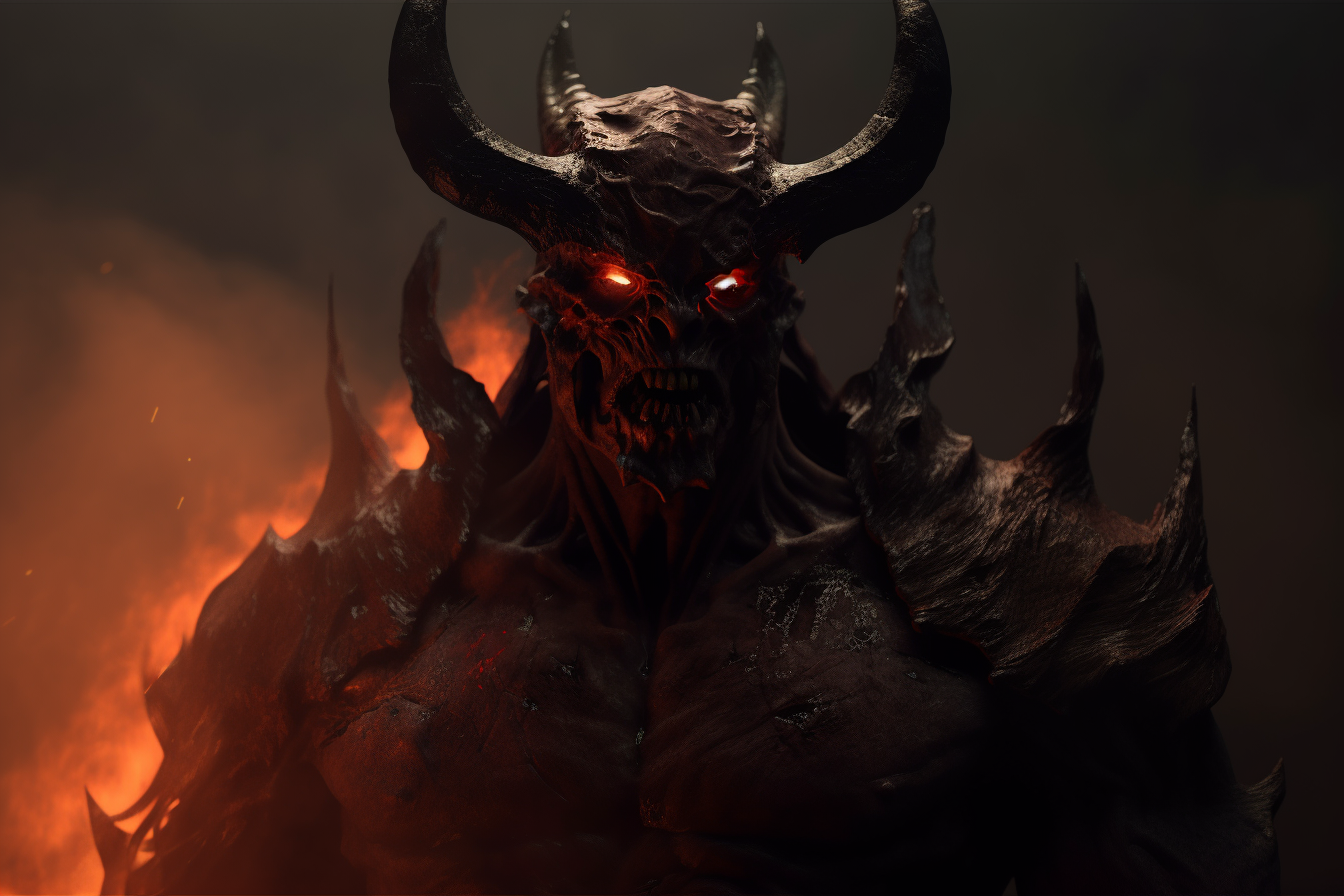
Human actor, Rudyard 'Brown Tooth' Harrington, portraying Ubus in an adaptation of Shadows of Vengeance. The use of prosthetics and special effects was hailed as revolutionary, but ultimately it was deemed too terrifying and future productions were less intense.Another of Greenleaf's plays is titled "The Light of Honor," which tells the story of the battle from Ara's perspective. The play explores Ara's deep sense of duty and loyalty to her followers, as well as her fierce determination to defend the Bastion of Honor from all who would seek to harm it. The play is a powerful tribute to the virtues of honor and loyalty, and it features powerful monologues and moving musical numbers that are sure to captivate audiences.
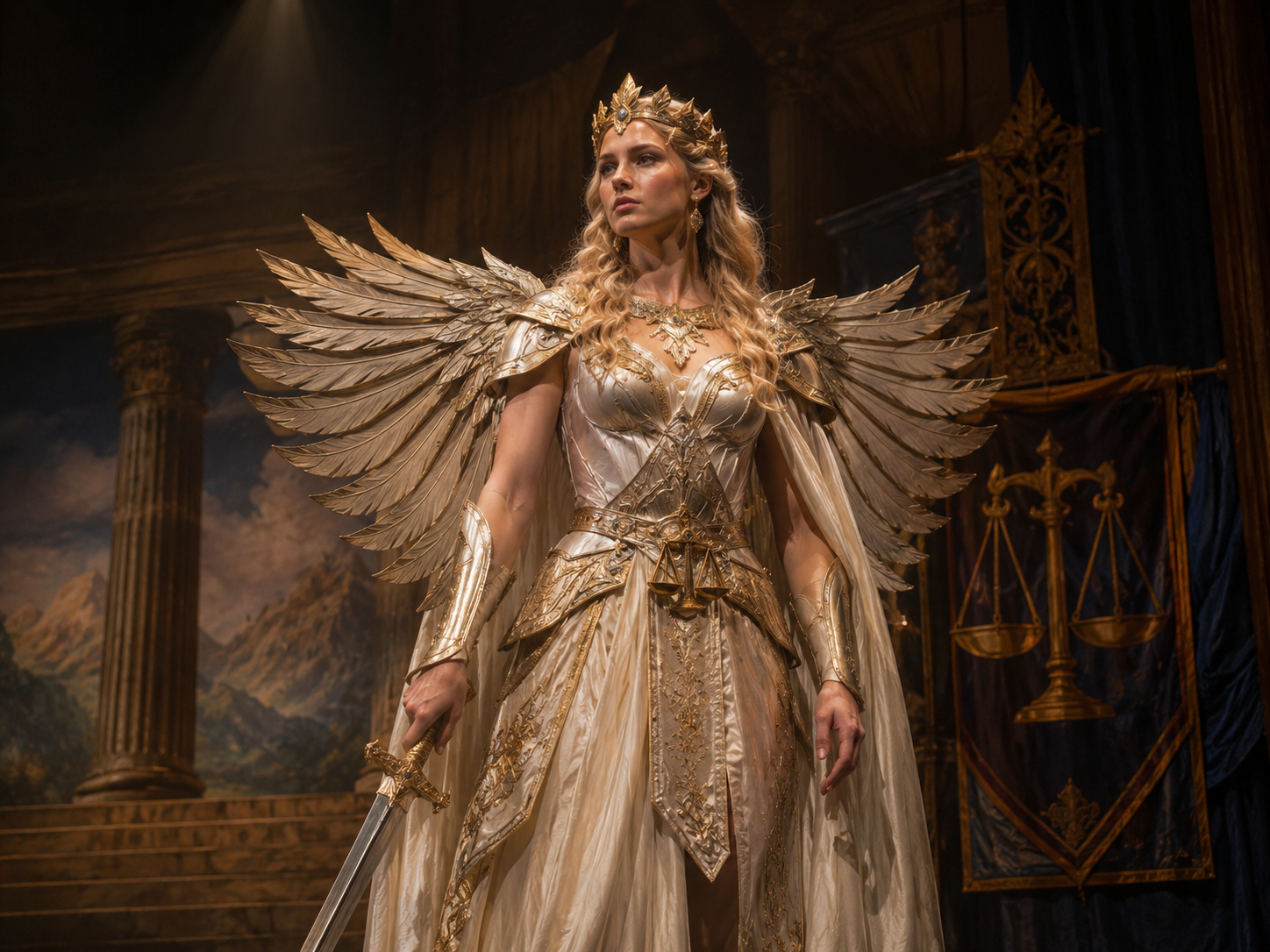
Human actress, Allynna Ralodi, portraying Ara in an adaptation of The Light of Honor.A third play by Tilly Greenleaf is titled "The Triumph of Light," which portrays the battle as a clash between the forces of darkness and light. The play features stunning visual effects, including vivid displays of light and shadow, and it explores the themes of redemption and forgiveness. The play's finale is a breathtaking display of light and sound, with the forces of light triumphing over the forces of darkness in a spectacular display of divine power.
The Four Combatants
by Gromgar
Gromgar's sculptures of the Battle of the Sanctum are masterpieces of craftsmanship, capturing the essence of each of the combatants in stunning detail. The sculptures are made of various materials, including stone, bronze, and iron, and each one stands several feet tall.
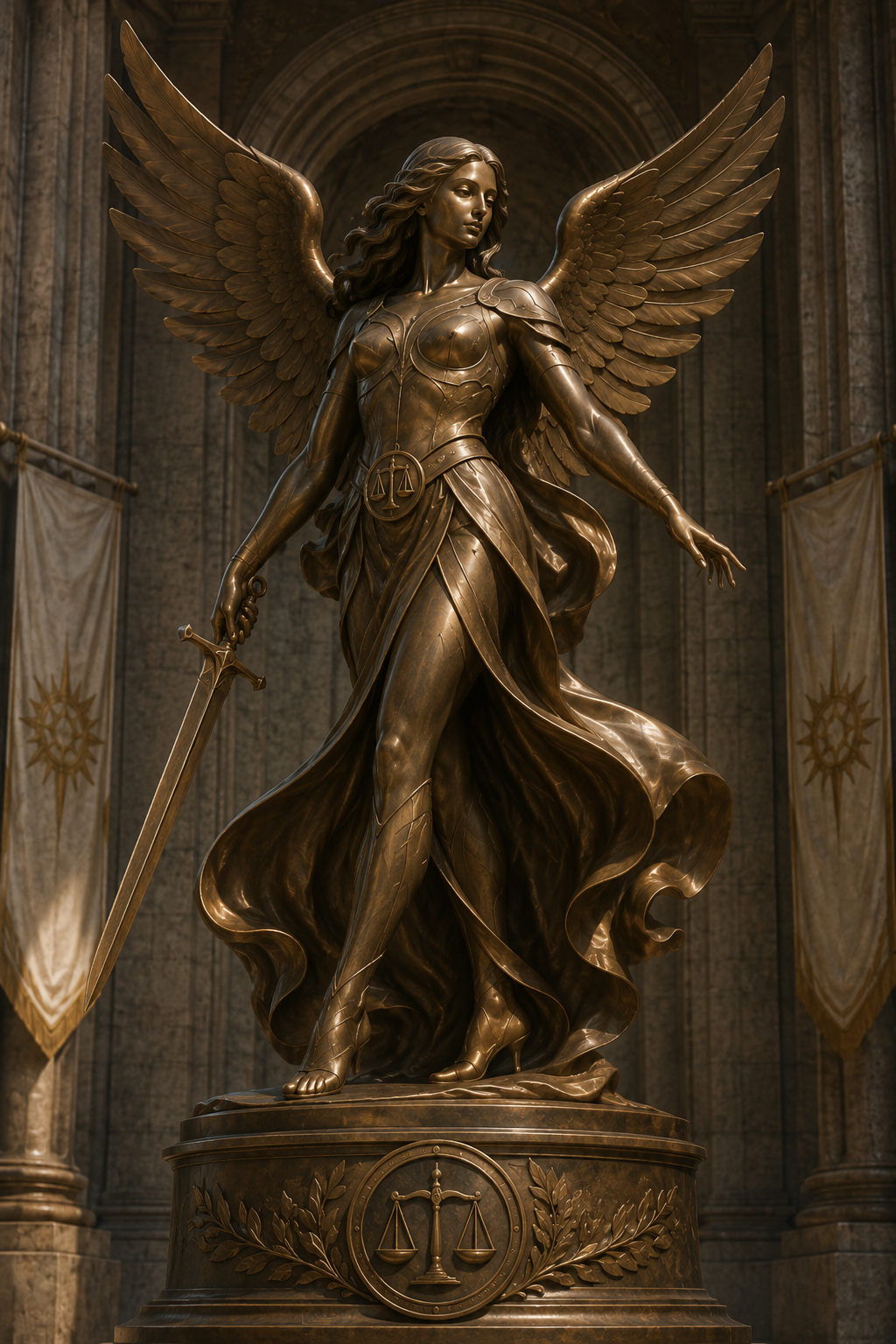
- The first sculpture depicts Ara, the Goddess of Honor, wielding her sword Aetherion. Her expression is fierce and determined, her muscles tense as she prepares to strike her enemies. The sculpture is made of bronze and is titled "Aetherion's Champion."
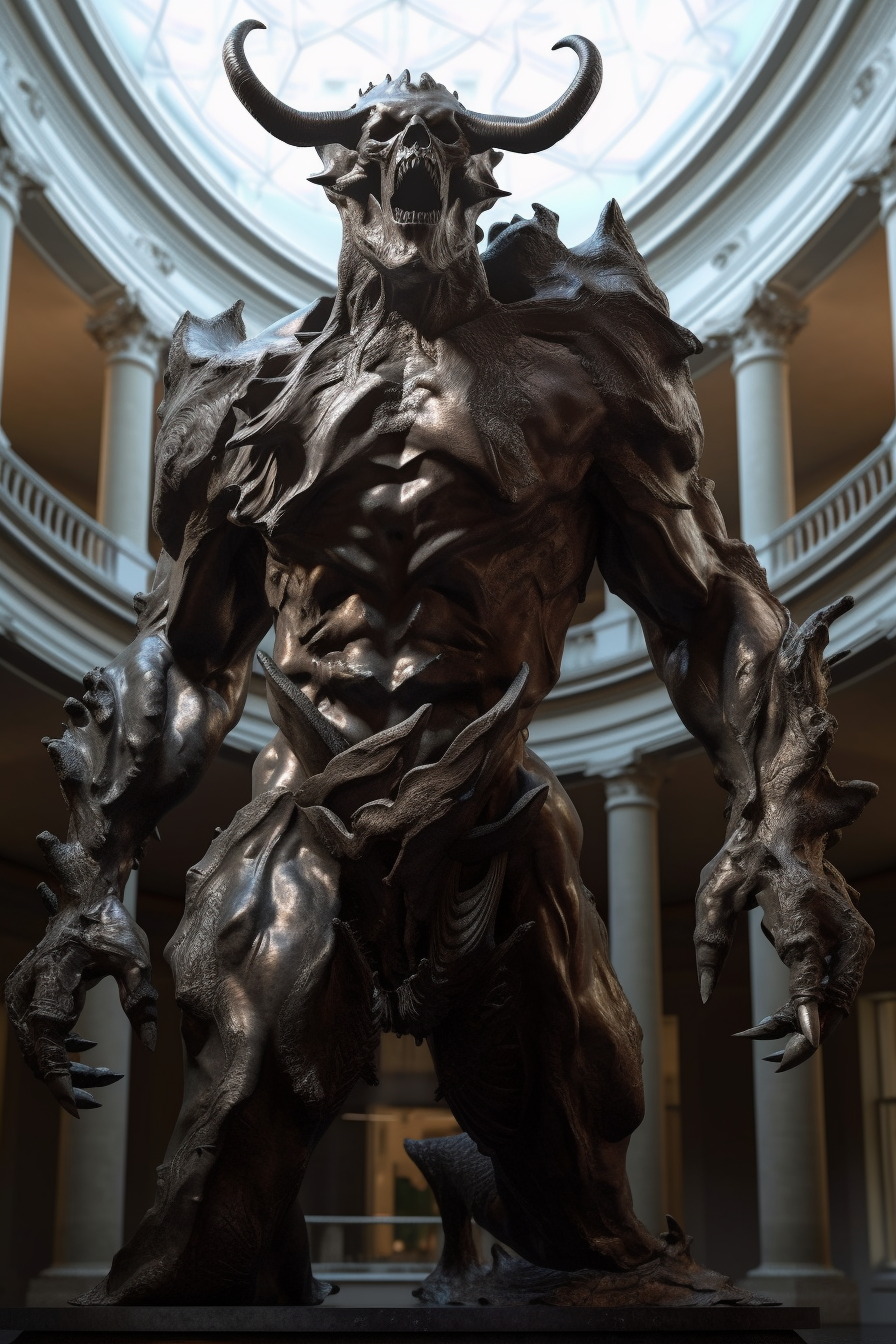
- The second sculpture portrays Ubus, the God of Vengeance, with his arms outstretched and his face twisted in a snarl of anger. His eyes seem to glow with an otherworldly light, and the sharp edges of his armor glint menacingly in the light. The sculpture is made of iron and is titled "Vengeance Incarnate."
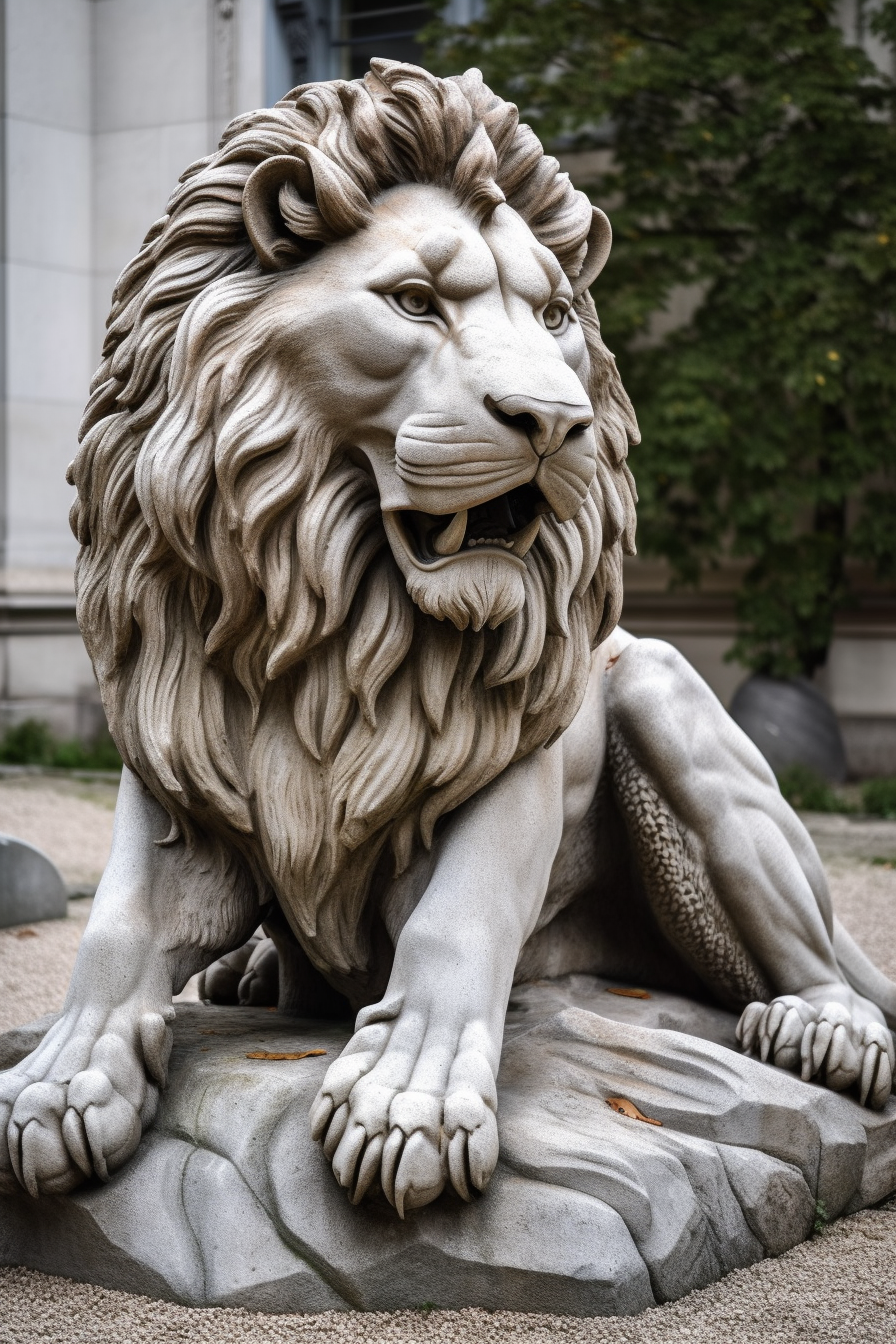
- The third sculpture depicts Vigilance, Ara's loyal companion and protector. The massive creature is shown crouched low to the ground, ready to pounce on any threats to its mistress. Its claws and teeth are bared, and its fur is bristling with aggression. The sculpture is made of stone and is titled "Guardian of the Sanctum."
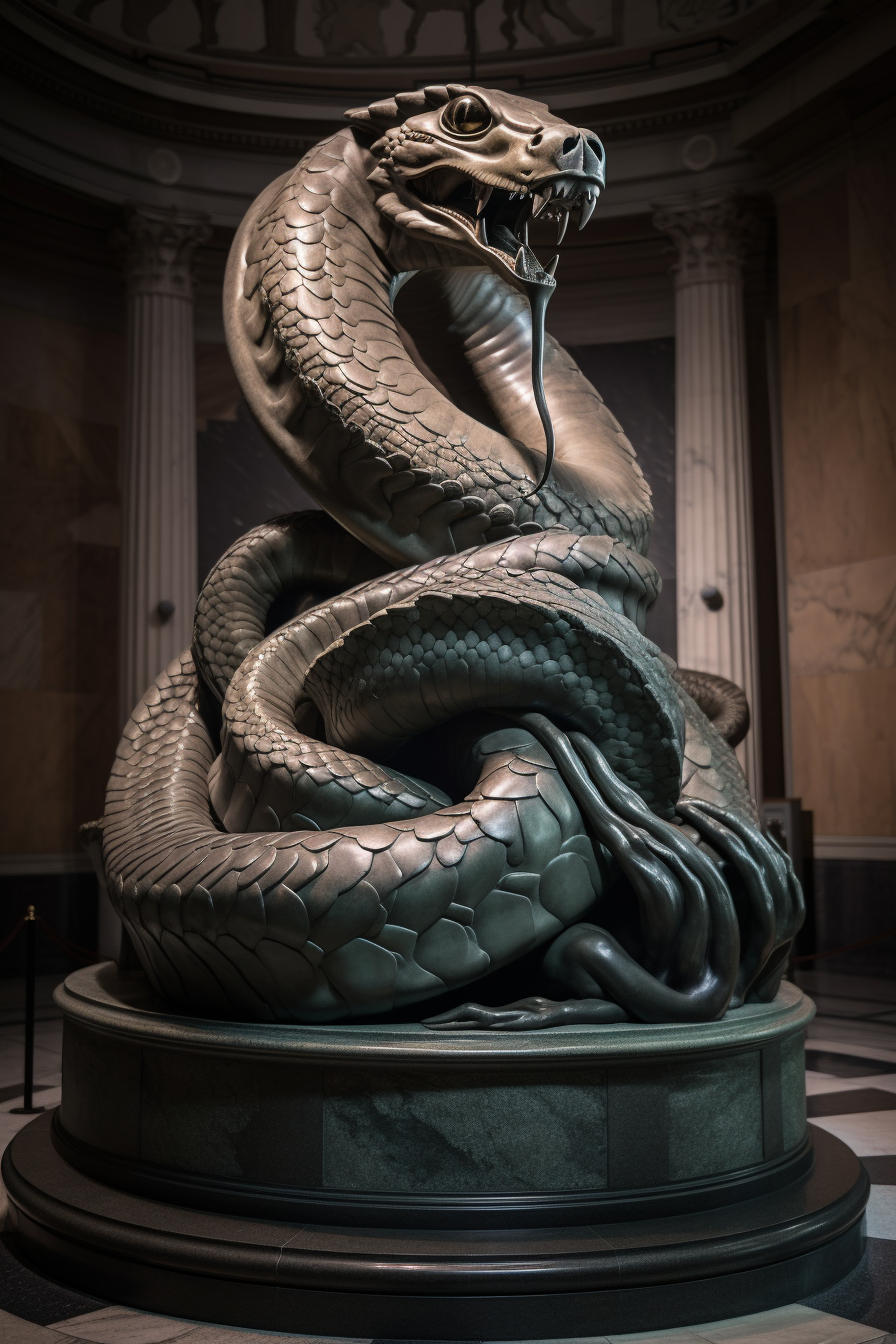
- The fourth sculpture features Vengazara, Ubus's Shadow Serpent. The sleek creature is coiled around a stone pillar, its venomous fangs bared and its eyes fixed on its prey. The sculpture is made of bronze and is titled "The Shadow Lurks."
Each sculpture is a masterpiece of artistry, with intricate details that bring each character to life in vivid detail. Together, they form a stunning tribute to the Battle of the Sanctum, capturing the fierce determination and intensity of the combatants in a way that only Gromgar's skillful hands could achieve.
Aetherion's Champion
by Gromgar
Vengeance Incarnate
by Gromgar
The Guardian of the Sanctum
by Gromgar
The Shadow Lurks
by Gromgar