Prehistoric Age
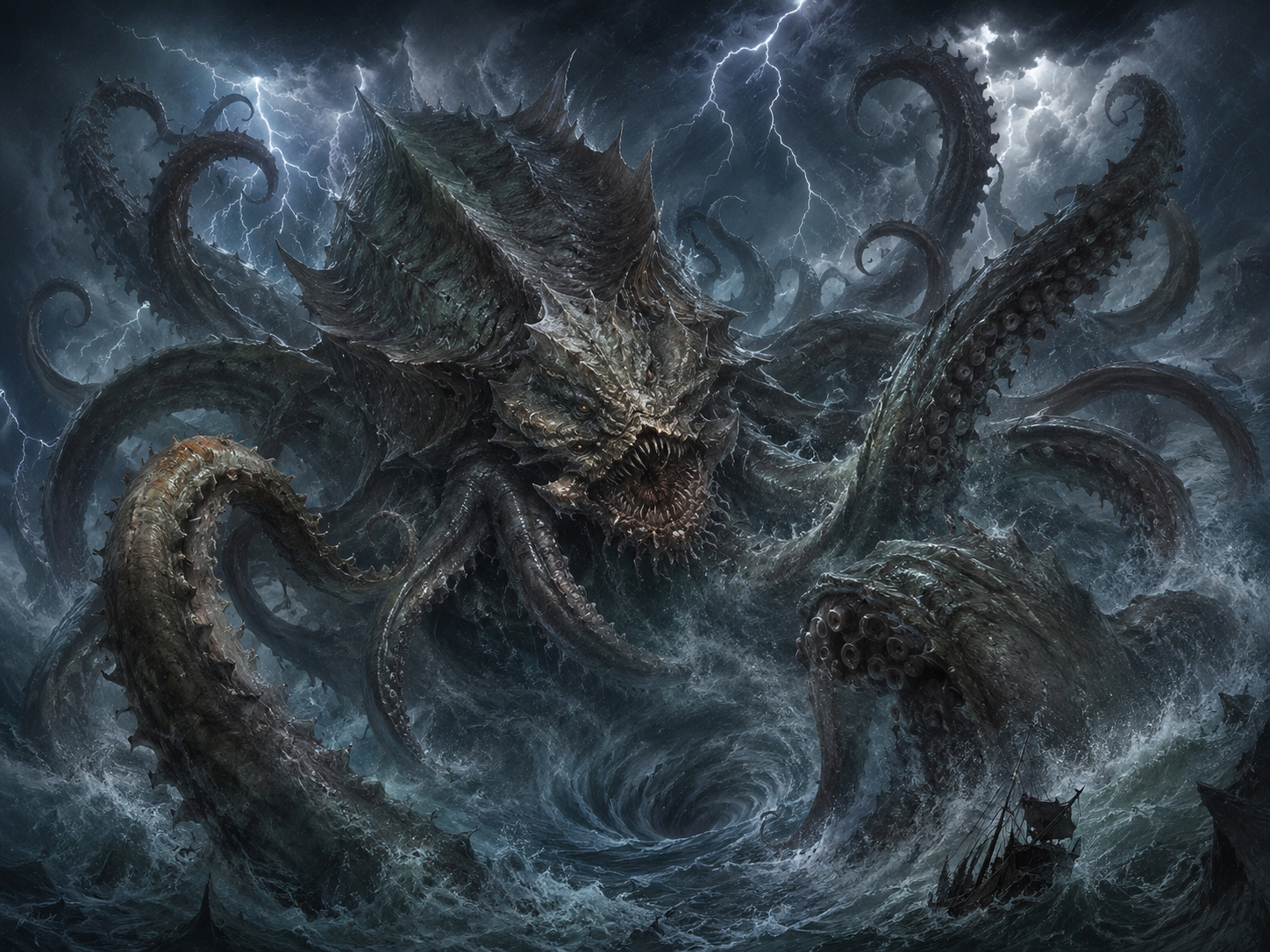
During the Age of Prehistory, which lasted from -1,000,000 BTF to -100,000 BTF, the world of Andórë experienced a period of rapid growth, with the environment stabilizing and diverse ecosystems emerging. With the primordial elemental titans safely imprisoned, life on Andórë flourished, and the world was filled with an incredible variety of strange and wondrous creatures.
- Rise of the Dragons: The dragons were among the first beings to arise during this age. They established their dominance over vast territories and developed complex societies, complete with hierarchical structures and a deep understanding of magic. The dragons were seen as the embodiment of the elemental forces that once threatened the world, and their very presence helped maintain the balance between the elements.
- Emergence of the Giants: Parallel to the rise of the dragons, the giants emerged as another powerful civilization in Andórë. They, too, had a deep connection with the elements, and their culture revolved around harnessing and controlling these forces. The giants built impressive structures and cities, demonstrating their mastery of both engineering and magic.
- Flourishing of Megafauna: The Age of Prehistory was also marked by the presence of massive, awe-inspiring creatures known as megafauna. These colossal beasts roamed the lands, seas, and skies of Andórë, with some species rivaling the dragons and giants in terms of size and power. Among these creatures were titanic reptiles, gargantuan mammals, and immense avians that dominated the ecosystems of the world.
- The Age of Prehistory also saw the rise of various monstrous creatures, such as krakens, purple worms, hydras, rocs, and other legendary beings. These creatures often had unique and powerful abilities, and they thrived in the wild and untamed world of Andórë.
- Magical Creatures: This age also gave birth to magical creatures like elementals, fey, and various magical beasts. Some of these creatures were the result of the residual magic left behind from the titanic battles of The Primordial Age, while others were born from the natural magical energies of the world.
- Throughout the Age of Prehistory, the gods of Andórë watched over the world from afar, content to let life evolve and flourish on its own. They did not directly intervene in the affairs of the dragons, giants, or other creatures that inhabited the world, allowing them to grow and develop their own societies and cultures. The stage was set for the Age Of Monsters and the eventual rise of the mortal races that would come to worship the gods.
Rise of the Dragons
During the Age of Prehistory, the dragon society of Andórë was a loose confederation of dragon territories and family units, connected through a mutual respect for the Gold Dragon Queen Imelyn, who served as the central figure of authority and guidance.
Each of the 15 types of true dragons had their own preferred habitats and territories, with the Metallic, Chromatic, and Gem dragons each occupying distinct regions of Andórë. Although these regions occasionally overlapped, the dragons maintained a balance, respecting each other's domains and resources.
The dragon society was organized into several layers:
- Dragon Queen Imelyn: As the sole and undisputed ruler of the dragons, Imelyn was the ultimate authority in dragon society. She was respected and admired for her wisdom and power, and her guidance was sought by dragons of all types. She played a crucial role in mediating disputes and maintaining balance among the dragon families.
- Dragon Clans: Each type of dragon had its own clan, led by an elder dragon who acted as the representative for their respective type. These elders were responsible for the well-being of their clan members and served as advisors to Queen Imelyn.
- Family Units: Within each clan, dragons were organized into family units that consisted of parents and their offspring. These families usually lived together in a communal lair and shared resources.
- Solitary Dragons: Some dragons chose to live alone, distancing themselves from the larger society. While they still acknowledged the authority of Queen Imelyn, they preferred a more solitary existence.
The dragon society valued knowledge, power, and the elemental forces from which they were born. They maintained a deep connection to the magical energies of Andórë, and many dragons were adept at harnessing these energies to perform incredible feats of magic.
Dragons also had a strong tradition of oral history, with stories and legends passed down through the generations. The elders and scholars within each clan were responsible for preserving these stories, ensuring that the knowledge and experiences of their ancestors were never forgotten.
During the Age of Prehistory, the dragons were largely focused on establishing their territories and maintaining the balance of elemental forces within the world. They generally stayed out of the affairs of other creatures, including the giants, who were forging their own civilization during this time. However, occasional skirmishes and disputes did occur between the dragons and other powerful beings of Andórë, foreshadowing the conflicts that would arise in future ages.
Dragon Clans
The leaders of the dragon clans were ancient and powerful dragons known as the Clan Elders. Each elder was chosen for their wisdom, strength, and experience, and they were deeply respected by the members of their respective clans. The Clan Elders served as advisors to Dragon Queen Imelyn and acted as the voice of their clan in matters that concerned all of dragonkind.
Here are the Clan Elders for each dragon type during the Age of Prehistory:
Metallic Dragons:
- Gold Dragons: Eldenax the Enlightened
- Silver Dragons: Argentiaris the Noble
- Bronze Dragons: Thesilus the Inquisitor
- Copper Dragons: Kuprumis the Jester
- Brass Dragons: Auricantos the Conversationalist
Chromatic Dragons:
- Red Dragons: Fervirax the Covetous
- Black Dragons: Venamor the Morose
- Blue Dragons: Electrakhan the Manipulator
- Green Dragons: Viridiax the Deceiver
- White Dragons: Cryomaris the Savage
Gem Dragons:
- Amethyst Dragons: Logikar the Rational
- Emerald Dragons: Studiorum the Scholar
- Sapphire Dragons: Militarius the Tactician
- Topaz Dragons: Solithar the Unpredictable
- Crystal Dragons: Luminara the Radiant
These Clan Elders were responsible for guiding their clans through the various challenges and conflicts that arose during the Age of Prehistory. They also worked together under the leadership of Dragon Queen Imelyn to maintain the balance and harmony of dragon society, ensuring that the dragons remained a powerful and respected force within the world of Andórë.
Dragon Holidays
There were several dragon holidays and gathering times throughout the year in the Age of Prehistory, which allowed the dragons to celebrate their culture, share knowledge, and strengthen the bonds between the different dragon clans. Some of these notable holidays and gatherings were:
- Convocation of Claws: Held at the beginning of each year, this gathering brought together dragons from all clans to celebrate unity and renew their commitment to working together for the greater good of dragonkind. It was a time for sharing stories, knowledge, and showcasing their various talents.
- Festival of Flames: A mid-year celebration primarily observed by the fire-breathing dragons, such as Gold, Brass, and Red dragons, to honor the power of fire and its role in shaping the world. This festival was marked by various fire displays, fire-breathing competitions, and the creation of intricate, temporary sculptures made from melted metals.
- Day of the Winds: Celebrated by the dragons with air-based breath weapons, like Silver, Bronze, and Emerald dragons, this holiday honored the power of air and its importance in dragon flight. Dragons would participate in aerial acrobatics, races, and contests to show off their flying prowess, and they would share stories of their great aerial adventures.
- Crystalline Gala: A gathering specifically for the Gem dragons to celebrate their unique contributions to dragon society. The Crystalline Gala was marked by feasts, the exchange of knowledge, and the display of precious gemstones and crystalline art. Dragons from other clans were welcome to attend, but it was primarily a celebration of Gem dragon culture.
- Night of the Eclipse: Coinciding with a solar or lunar eclipse, this was a time when dragons would gather to observe the celestial event and reflect on the mysteries of the cosmos. It was a time of introspection and contemplation for dragons, often leading to profound discussions and debates about the nature of existence and their place in the world.
These holidays and gatherings allowed dragons to maintain a sense of community and cultural identity, even as they lived largely solitary lives. They also served as a way for the different dragon clans to maintain peaceful relations and work together towards the common goal of preserving and protecting the world of Andórë.
The Dragon Queen
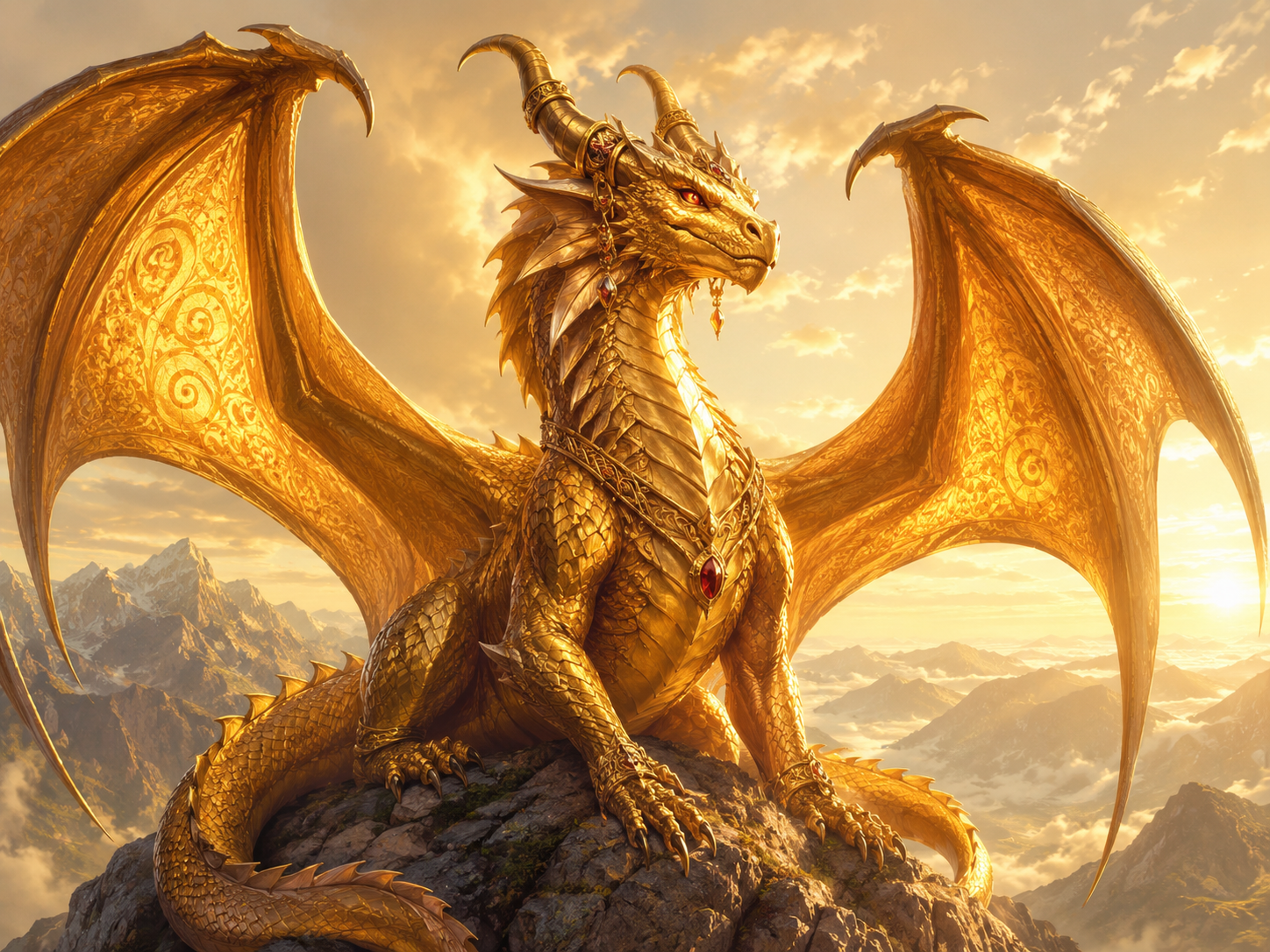
Dragon Queen Imelyn is an ancient and incredibly powerful gold dragon who has ruled over the dragon society in Andórë since the age of Prehistory. She is renowned for her wisdom, grace, and benevolence, commanding the respect and admiration of dragons from all the families - Metallic, Chromatic, and Gem.
Imelyn is a majestic figure with shimmering golden scales that seem to catch and radiate light, giving her an awe-inspiring presence. Her large, piercing eyes display a deep intelligence and understanding, while her serene expression is often accompanied by an enigmatic smile. Imelyn's wings are grand and elegant, with delicate, intricate patterns etched into their membranes, reflecting her status as the supreme leader of dragonkind.
As a ruler, Imelyn values harmony, diplomacy, and the pursuit of knowledge. She encourages the different dragon clans to cooperate and learn from one another, fostering an atmosphere of mutual respect and understanding. Imelyn is known for her impartiality and fairness, always seeking the most equitable solution to any conflict or disagreement.
Despite her gentle and diplomatic nature, Imelyn is a formidable force when provoked or when the safety of her subjects is threatened. Her immense power, coupled with her centuries of experience, make her a nearly unbeatable adversary.
Over the eons, Imelyn has amassed an extensive library of scrolls, tomes, and artifacts, which she uses to deepen her knowledge of the world and to guide her decisions as a ruler. This vast collection of wisdom is one of the many reasons why she is so revered by her subjects, and her tireless pursuit of knowledge has become a hallmark of her reign.
Emergence of the Giants
During the Age of Prehistory, giant society was structured around the caste system, with each type of true giant living within their own clans and territories. The society was heavily focused on maintaining order, strength, and unity among the different giant clans.
- Storm Giants: As the top of the caste hierarchy, the storm giants were considered the wisest and most powerful of the giants. They often served as leaders, diplomats, and advisors to the other giants. Living in magnificent palaces in the sky or on mountaintops, they were responsible for ensuring that the different giant clans cooperated and remained in harmony with one another.
- Cloud Giants: Cloud giants were known for their artistic inclinations and their mastery of the sky. They lived in grand castles that floated on clouds, and their society valued creativity, beauty, and intellect. They were often the patrons of the arts and hosted grand gatherings to showcase artistic achievements within giant society.
- Fire Giants: The fire giants were master smiths and warriors, with their society centered around forging weapons and armor, as well as honing their martial prowess. Living in the depths of volcanic mountain ranges, fire giants were responsible for providing the finest arms and armaments for the rest of giant society.
- Frost Giants: Frost giants inhabited the coldest regions of Andórë, building their settlements in ice caverns and snowy mountains. They were known for their skills in hunting, trapping, and surviving in harsh environments. Their society valued strength and resilience, and they often served as scouts and protectors for the other giant clans.
- Stone Giants: Stone giants lived deep within the earth, carving out magnificent cities in the heart of mountains. They were master builders and stonemasons, responsible for the construction of the grand structures that housed the other giant clans. Their society valued patience, precision, and a deep connection with the earth.
- Hill Giants: Hill giants were the smallest and least powerful of the true giants. They lived in simple settlements in the foothills and plains, often serving as farmers and laborers for the other giant clans. Their society valued hard work, humility, and a strong connection to the land.
Despite the caste system, the giants of Andórë generally had a strong sense of unity and mutual respect, with each clan recognizing the strengths and contributions of the others. Under the leadership of Storm Giant King Cigrion, the giants worked together to maintain peace, order, and prosperity among their kind.
Clan Leaders
During the Age of Prehistory, the leaders of the various giant clans were:
Storm Giants:
- King Cigrion, the supreme ruler of all giantkind
- Queen Veristal, Cigrion's wise and compassionate consort
- High Chieftain Thorgal, leader of the Thunderbolt Clan
- High Chieftainess Yseldra, leader of the Tempest's Roar Clan
Cloud Giants:
- Cloud Lord Aethorin, leader of the Skybound Harmony Clan
- Cloud Lady Melindara, leader of the Celestial Dreamers Clan
- Cloud Lord Zephyros, leader of the Windswept Visionaries Clan
Fire Giants:
- Fire King Gromthar, leader of the Molten Forge Clan
- Fire Queen Kaldris, leader of the Blazing Anvil Clan
- Fire Lord Harthgar, leader of the Emberheart Clan
Frost Giants:
- Frost King Ymir, leader of the Icebound Hunters Clan
- Frost Queen Skadi, leader of the Winter's Fury Clan
- Frost Chieftain Hrothgar, leader of the Glacial Sentinels Clan
Stone Giants:
- Stone King Durnar, leader of the Mountain's Core Clan
- Stone Queen Talya, leader of the Earthshaper's Clan
- Stone Lord Gorrum, leader of the Deepstone Clan
Hill Giants:
- Hill Chieftain Grug, leader of the Earthbound Clan
- Hill Chieftainess Murga, leader of the Green Hill Clan
- Hill Chieftain Vorn, leader of the Foothold Clan
Although the clans of each type of giant were led by their respective leaders, they all ultimately answered to King Cigrion, the Storm Giant King, who served as a unifying force for the various giant clans, ensuring cooperation and mutual respect among them.
Giant Holidays
The giant clans of Andórë observed several holidays throughout the year, celebrating their culture, achievements, and the natural world around them. Some of the key holidays included:
- Festival of the First Storm: Held at the beginning of the storm season, the Festival of the First Storm celebrated the might and majesty of storm giants, who were considered the highest caste among the giants. All giant clans would gather to watch the storm giants perform rituals to call forth lightning and thunder, demonstrating their power and influence over the elements.
- Skyward Ascension: Observed by the cloud giants, Skyward Ascension was a day where cloud giants would invite giants of other clans to visit their floating castles and cities. This holiday celebrated unity among giantkind and the beauty of the skies.
- Great Forge Day: On this day, fire giants honored their craftsmanship and skill in metalworking. Fire giants would demonstrate their abilities by crafting intricate weapons and armor, which they would then gift to worthy individuals from other giant clans. This celebration served to reinforce alliances and friendships between the clans.
- Winter's Embrace: Frost giants marked the beginning of the coldest season with Winter's Embrace, a day-long celebration of their mastery over ice and cold. Frost giants would create impressive ice sculptures and organize ice sports competitions, encouraging friendly rivalry among the various clans.
- Stone Awakening: This holiday celebrated the strength and resilience of stone giants. Stone Awakening was a time when stone giants would hold contests of strength and endurance, challenging each other and members of other clans to feats of physical prowess.
- Harvest Revel: Hill giants, who were considered the lowest caste among the true giants, hosted a celebration of the bounty of the earth. The Harvest Revel was a time for feasting and merriment, as the hill giants invited other clans to partake in the fruits of their agricultural labors.
These holidays helped to strengthen the bonds between the various giant clans, promoting unity and cooperation among the diverse groups of giantkind in Andórë.
The Giant King
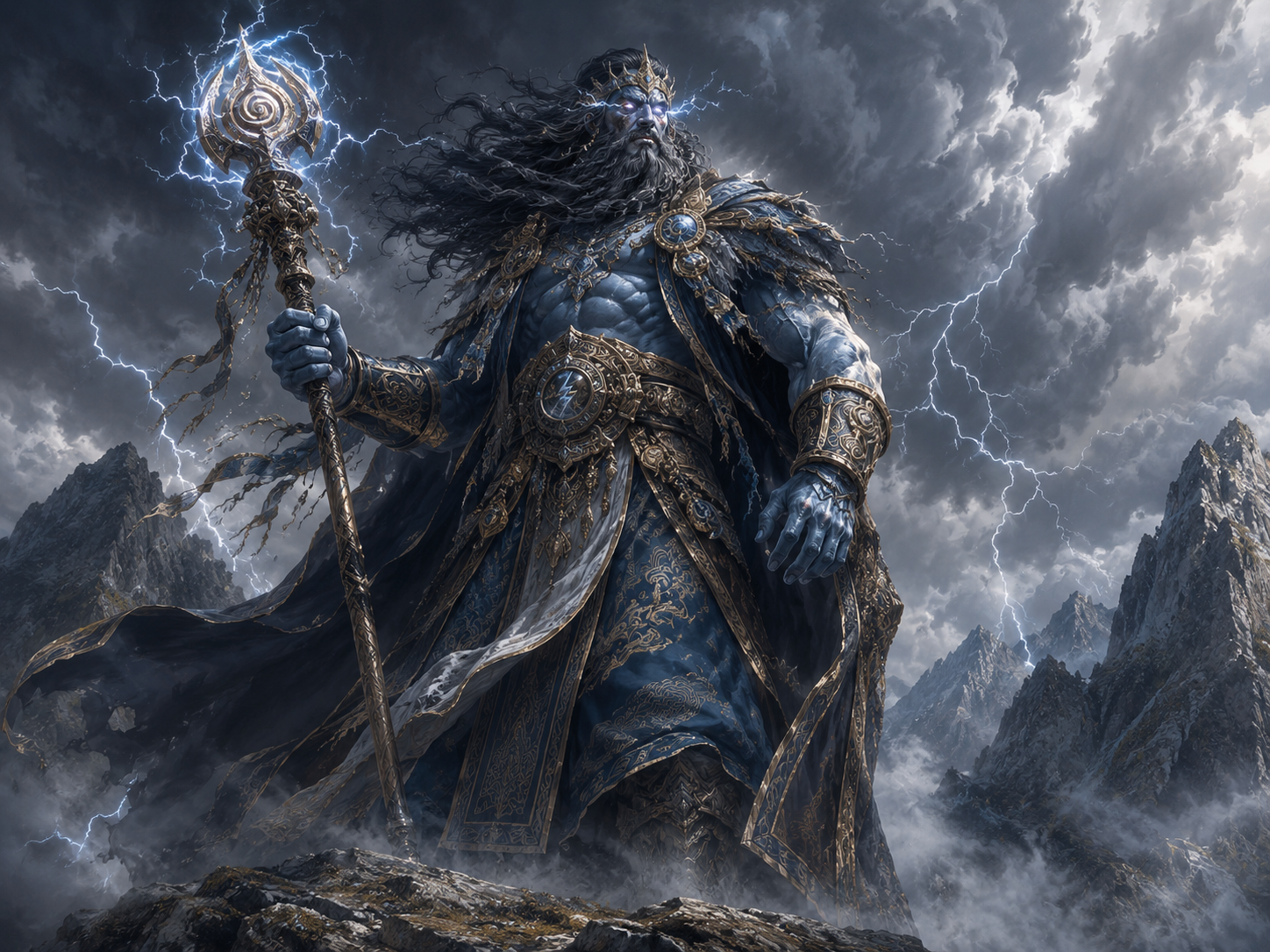
Storm Giant King Cigrion is an ancient and immensely powerful storm giant who has ruled over the giant society in Andórë since the age of Prehistory. He is renowned for his noble character, strength, and sense of responsibility towards all giants, regardless of their caste.
Cigrion is a colossal figure, standing taller than any other giant, with a muscular and imposing physique. His skin has a pale blue hue, reminiscent of the sky just before a thunderstorm, and his long, flowing hair resembles the darkest clouds in a tempest. His eyes flicker with lightning, giving him a commanding presence that few can ignore. As a symbol of his rule, Cigrion carries a mighty scepter, intricately crafted from the rarest metals and adorned with storm-related motifs.
As a leader, King Cigrion is deeply committed to the welfare and prosperity of giantkind. He values unity, honor, and discipline among his subjects, striving to maintain a harmonious society where each caste supports and respects the others. Cigrion is known for his fairness and wisdom, always seeking the most just resolution to disputes or conflicts.
King Cigrion is a skilled diplomat and a strong advocate for peace among giants. He often mediates between different clans, seeking to prevent unnecessary violence and to promote cooperation in times of need. Despite his diplomatic nature, Cigrion is a fierce warrior when the need arises, especially when the safety of his subjects is at stake. His command of storm-related magic and his sheer physical prowess make him a formidable adversary.
Under King Cigrion's rule, the giants have developed a rich culture, with each caste contributing their unique skills and knowledge to the greater whole. Cigrion's commitment to the well-being of all giants has earned him the unwavering loyalty of his subjects, securing his place as a beloved and respected leader.
Megafauna
During the Age of Prehistory in Andórë, the megafauna played a significant role in shaping the world's landscapes and ecosystems. These gigantic creatures were not only immense in size but also in the impact they had on the environment and the living beings that shared their habitats.
Some of the notable megafauna that flourished during this time include:
- Behemoths: Massive, quadrupedal herbivores with heavily armored bodies, these colossal creatures roamed the vast plains and grasslands, grazing on the abundant vegetation. Their sheer size made them nearly impervious to predators, and their presence shaped the ecosystems around them, with many species relying on the behemoths for both food and shelter.
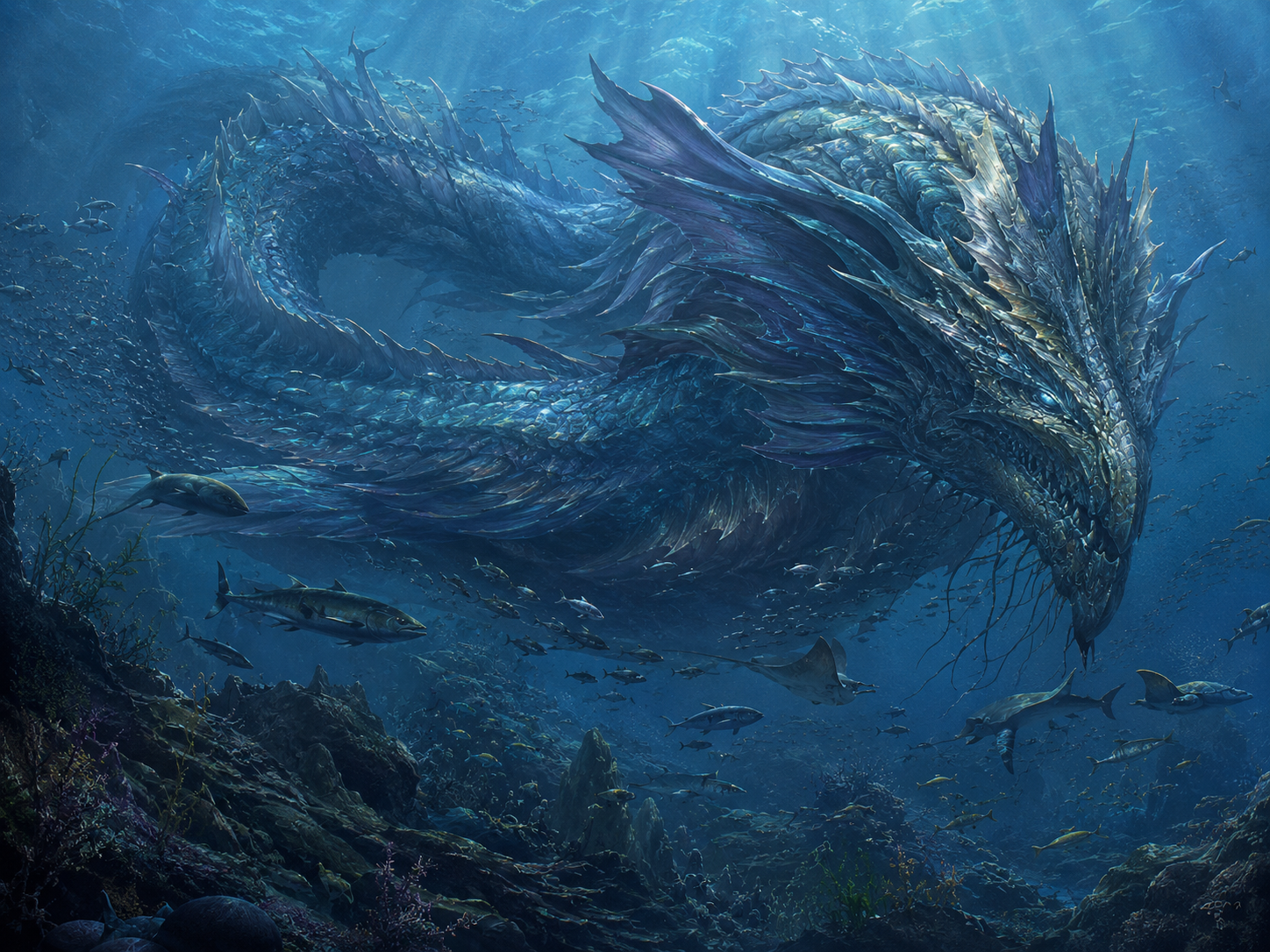
- Leviathans: Enormous aquatic creatures that dominated the oceans and seas of Andórë. They came in various shapes and forms, from massive serpentine creatures to colossal crustaceans. Their presence in the waters influenced the migratory patterns and behaviors of smaller marine life, and their feeding habits played a vital role in maintaining the balance of the aquatic ecosystems.
- Thunderbirds: Towering avian creatures with wingspans that could blot out the sun, thunderbirds ruled the skies during the Age of Prehistory. These gigantic birds were known for their affinity for storms, often soaring through the air during the most violent of tempests. Their powerful wings generated powerful gusts of wind, and their sharp beaks and talons made them formidable predators.
- Colossapedes: Massive, many-legged creatures that thrived in the dense forests and jungles of Andórë. These enormous arthropods were expert climbers and burrowers, shaping the landscapes around them by felling trees and creating vast networks of underground tunnels.
- Titanotheres: Huge, lumbering herbivores resembling prehistoric mammals, these creatures were characterized by their large, curved tusks and thick, shaggy fur. They traveled in herds through the tundra and boreal forests, leaving vast, trampled paths in their wake and contributing to the ecosystems through their grazing and migratory patterns.
During the Age of Prehistory, the megafauna were an essential aspect of the world's ecosystems. Their activities played a significant role in shaping the landscapes, creating habitats for other creatures, and maintaining the balance of life in Andórë. While the dragons and giants were the dominant intelligent beings of this age, the megafauna left an indelible mark on the natural history of the world.
A Monstrous World
During the Age of Prehistory, the world of Andórë was inhabited by numerous monstrous creatures, each with its own unique abilities and characteristics. These beings were often the stuff of legends, and their presence added an element of danger and mystery to the world.
- Krakens: These enormous cephalopods were feared for their immense size and strength. They lurked in the deepest parts of the ocean, emerging to prey on unsuspecting ships or massive sea creatures. Krakens were known for their powerful tentacles, which could crush a ship or drag a creature beneath the waves, and their ability to create whirlpools and summon storms.
- Purple Worms: Gigantic, burrowing creatures that could grow up to hundreds of feet in length, these monstrous worms dwelled beneath the surface of the earth. They were known for their voracious appetite, consuming everything in their path as they tunneled through the ground. Their powerful jaws and corrosive saliva could reduce solid rock to rubble, making them a deadly foe for any who ventured too close to their lairs.
- Hydras: Multi-headed reptilian creatures, hydras were renowned for their regenerative abilities. Whenever one of their heads was severed, two more would grow in its place, making them incredibly difficult to defeat. They were highly adaptable creatures, able to thrive in a variety of environments, from swamps and forests to mountains and deserts.
- Rocs: Massive birds of prey with wingspans that could reach hundreds of feet, rocs were known for their incredible strength and speed. They were capable of lifting massive prey in their talons, including elephants and even giants. Their powerful beaks and razor-sharp talons made them formidable predators, and their vast territories often encompassed entire mountain ranges or large swathes of desert.
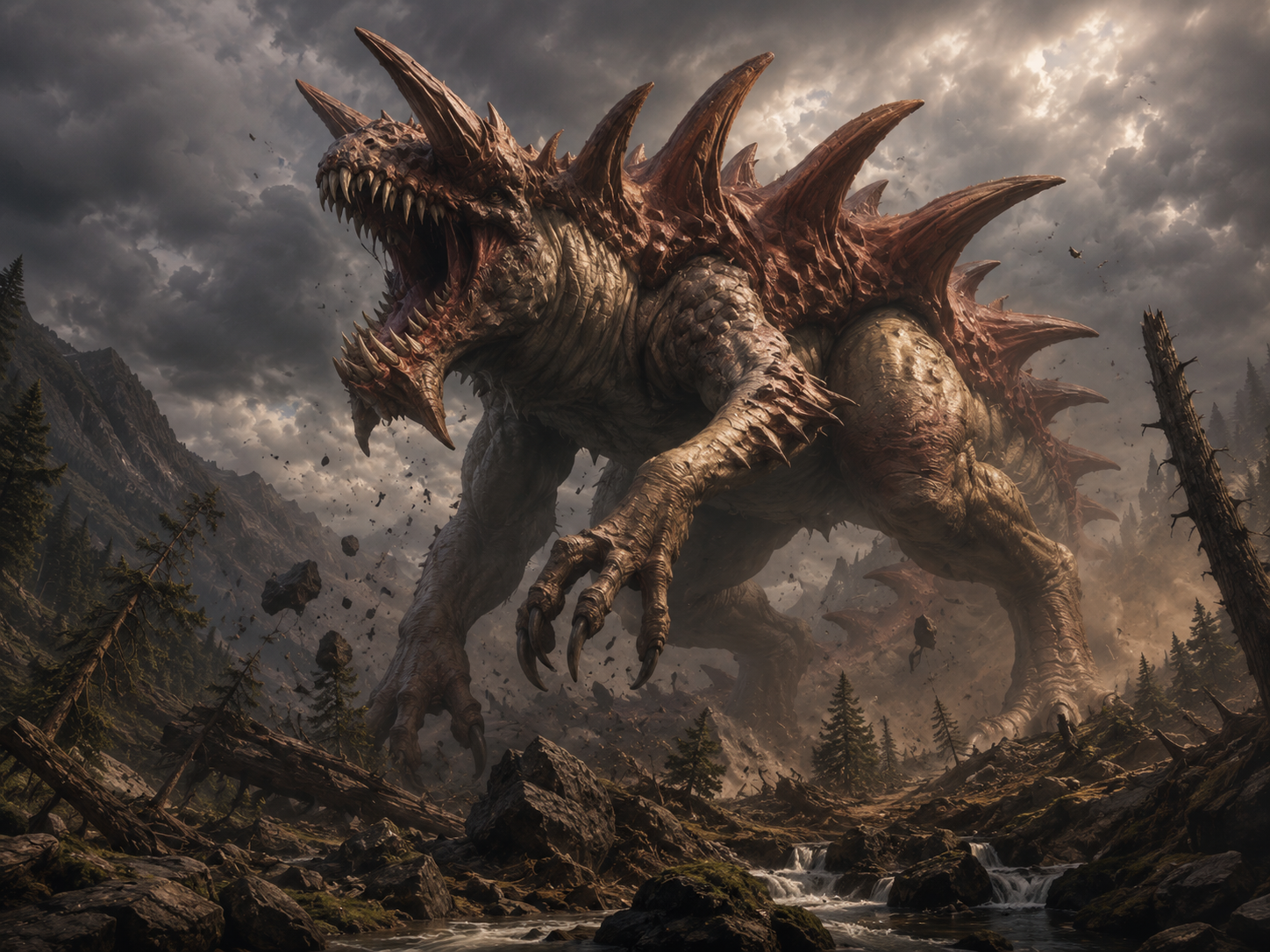
- Tarrasques: These immense, lumbering beasts were the embodiment of destruction. Covered in thick, armored plates, they were nearly impervious to conventional weapons. Their powerful jaws could crush stone, and their massive claws were capable of tearing through the strongest materials. Tarrasques were driven by an insatiable hunger, devouring everything in their path, and leaving a trail of destruction in their wake.
- Chimeras: Monstrous creatures with the body of a lion, the wings of a dragon, and the heads of a lion, dragon, and goat, chimeras were a terrifying combination of ferocity and elemental power. Each head possessed its own unique abilities, such as the lion's strength, the dragon's breath weapon, and the goat's magical powers, making them formidable opponents in battle.
These monstrous creatures were just a few examples of the many legendary beings that inhabited the world of Andórë during the Age of Prehistory. Their presence added to the wild and untamed nature of the world, making it a place of wonder and peril.
Magical Creatures
During the Age of Prehistory, the world of Andórë saw the emergence of various magical creatures, each with their own unique abilities and characteristics. Some of these beings were born from the residual magic of The Primordial Age, while others were the result of natural magical energies or even from other Planes of Existence.
- Elementals: These beings were the embodiment of the four classical elements: air, water, fire, and earth. They could be found in regions with a strong connection to their respective elements, such as volcanoes, deep oceans, deserts, or caves. Elementals were capable of controlling and manipulating their element, making them formidable opponents or powerful allies.
- Fey: These magical beings hailed from the Feywild, a parallel plane of existence that was intimately connected to nature and the forces of life. The fey were diverse and varied in their appearance, ranging from beautiful nymphs to mischievous pixies and capricious sprites. They were known for their whimsical nature and powerful magic, which could be both wondrous and dangerous.
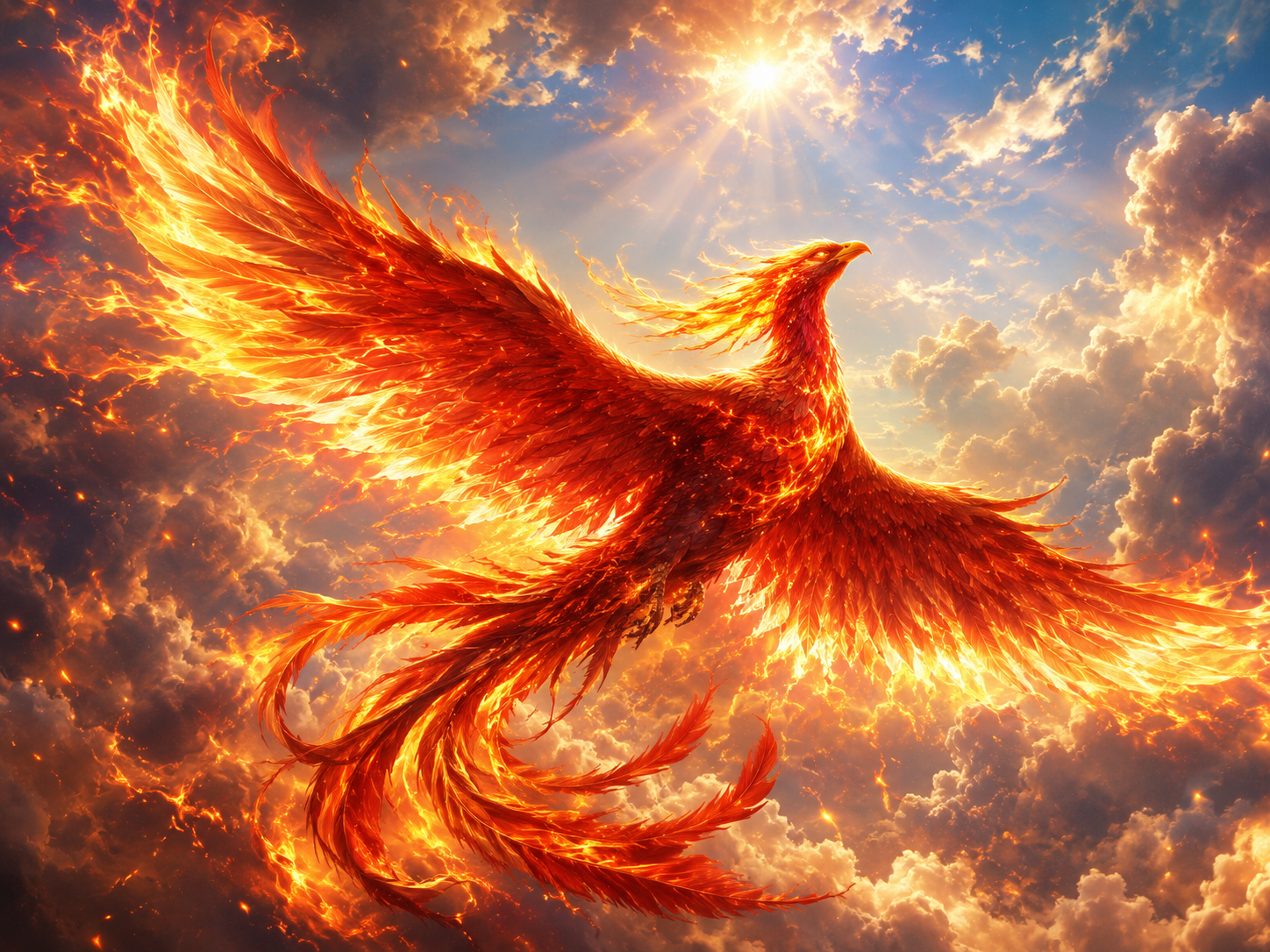
- Phoenixes: These majestic, fiery birds were considered symbols of rebirth and renewal. When a phoenix reached the end of its life cycle, it would burst into flames, only to be reborn from the ashes as a new, younger version of itself. Phoenixes possessed powerful fire magic and were revered by many cultures as symbols of hope and resurrection.
- Unicorns: These magical, horse-like creatures were considered embodiments of purity and grace. They were often found in ancient, enchanted forests, and their presence was said to bless the surrounding lands with healing and protection. Unicorns were known for their powerful healing magic and their ability to purify water and cure diseases.
- Will-o'-the-wisps: These mysterious, glowing orbs of light were often found in swamps and marshlands. They were known to lure travelers off their paths, leading them deeper into the treacherous terrain. Will-o'-the-wisps were thought to feed on the life force of those they ensnared, making them dangerous and unpredictable creatures.
- Shadow Mastiffs: These canine creatures were native to the Shadowfell, a dark and twisted reflection of the material plane. They were known for their stealth and cunning, able to blend into the shadows and hunt their prey with ruthless efficiency. Shadow mastiffs were often used as guardians or trackers by powerful beings from the Shadowfell.
These magical creatures were just a few examples of the many wondrous beings that inhabited the world of Andórë during the Age of Prehistory. Their presence added to the rich tapestry of life on the planet, making it a place of enchantment and mystery.
Expanding Pantheon
As the world of Andórë entered the Age of Prehistory, the pantheon of gods experienced a significant expansion. The gods who had triumphed over the primordial elemental titans sought to restore balance and maintain order in the world as it continued to develop. They recognized the need for new gods to govern various aspects of existence, and thus, the pantheon grew.
- Khyzlios and Venera: As the world transitioned from The Primordial Age to the Age of Prehistory, the concepts of night, darkness, and the mysteries they hold became more prominent. In response, Tuula, the Goddess of Seasons, reached into the darkness and found two deities without a home - Khyzlios and Venera. As the god and goddess of night, they held dominion over the grave and twilight domains and appeared as vampiric and werewolf-like beings, respectively.
- Bateus and Caneas: As the world's inhabitants evolved, so too did the means of communication. The need for messengers and conveyors of information became apparent. Hykteus, the God of Science, summoned Bateus and Caneas from their itinerant ways to fulfill this role. They were siblings who represented both the order and chaos of messages, with Bateus being lawful good and Caneas being chaotic evil. Both appeared Human.
- Atdite: With the development of civilizations, the concepts of fortune, craftsmanship, and the importance of material wealth became more evident. Yxtuna, the Goddess of Order, summoned forth Atdite, the Goddess of Fortune, to oversee these aspects. Atdite held sway over the arcana and forge domains and appeared as a fire Genasi.
- Chulios: The cycle of life and death became increasingly significant as the world's inhabitants multiplied. Rildir, the God of Tranquility, invited Chulios, the God of Life, to preside over the grave and life domains. Chulios appeared as a loxodon, symbolizing strength and wisdom.
- Greana: The world's natural bounty continued to grow, and Phohella, the Goddess of Wind, called Greana, the Goddess of Abundance, from deep within the Feywild. Greana held dominion over the nature and peace domains, ensuring prosperity and harmony in the world. She appeared as a wood elf, reflecting her deep connection to nature.
- Grixdite, Hitarr, Hoslous, Udagi, and Vizotl: As the world of Andórë continued to develop, various aspects of existence required divine guidance. These new gods emerged to govern light, shadows, dusk, flames, and other aspects of life. Each god held sway over specific domains and took on forms that represented their divine responsibilities.
The expansion of the pantheon allowed the gods to better maintain balance and order in the world. With the introduction of these new deities, the world of Andórë became a more diverse and rich tapestry of divine influence, affecting the lives of its inhabitants in myriad ways.