The Primordial Age
In the dawn of Andórë, an epoch now known as the Primordial Age unfurled, a time of celestial strife and earth-shattering conflict between gods and the formidable elemental titans. This era bore witness to monumental events and heroic sacrifices, shaping the very fabric of the world that would follow, paving the way for mortal life to flourish.
During this tumultuous age, the gods, faced with the overwhelming might of the elemental titans, forged the Divine Alliance, a union born of necessity to withstand a common enemy. Their ultimate goal: to remove the titans and render the world suitable for the growth and prosperity of mortal life. The Battle of Elemental Convergence marked a crucial turning point in the struggle, as the divine forces repelled their elemental adversaries, denying them dominion over the material plane. In a desperate gambit, the gods unleashed the Elemental Sundering, severing the vital link between the elemental and material planes, sapping the titans of their strength.
As the conflict raged on, legendary battles between gods and titans erupted, each clash echoing through the ages. These titanic confrontations led to the eventual defeat and imprisonment of the elemental titans. Amidst the chaos, two gods paid the ultimate price, Verlanis and Elumis, their names forever etched in the annals of history.
The Primordial Age reached its culmination with the sealing of the vanquished elemental titans, imprisoned deep within the bowels of Andórë, secured by arcane wards. This decisive act heralded the end of a time of turmoil, and a new epoch arose, the people of Andórë stepping forth into a world forever changed by the struggles of the divine, now ripe for mortal life to thrive and prosper.
Setting the Stage
During the conflict between the gods and the primordial elemental titans, several key events transpired that shaped the outcome of the struggle:
- The first major event was the formation of the Divine Alliance. The gods, recognizing the immense power of the elemental titans, decided to put aside their differences and unite against the common threat. This marked the beginning of a long and arduous battle for control of Andórë.
- The Battle of Elemental Convergence took place at a location where the elemental planes touched the material world. It was a turning point in the conflict, as the gods and their allies managed to repel the elemental titans and their forces, preventing them from establishing a permanent foothold on the world.
- The Elemental Sundering was a desperate act carried out by the gods, who used their combined power to sever the connection between the elemental planes and the material world. This weakened the titans and prevented them from drawing more power from their respective planes. Several gods faced off against the elemental titans in a series of epic one-on-one battles. These clashes led to the eventual defeat and imprisonment of each titan. Notable confrontations included:
- Tuulla and Aquarion, the Endless Depths
- Oxdros and Zephyronax, the Howling Tempest
- Sedarr and Pyrothar, the Eternal Blaze
- Rildir and Terragor, the Unyielding Mountain
- Verlanis, the God of Shadows, was slain while trying to bind Cinereus, the Smoldering Gale, to a magical prison.
- Elumis, the Goddess of Hope, sacrificed herself to protect her allies from Magmokar, the Blazing Depths.
- The final event was the sealing of the elemental titans. The gods devised a plan to imprison the defeated titans deep within the world of Andórë, using powerful magical wards to keep them contained. This marked the end of the Primordial Age and the beginning of a new era for Andórë.
Throughout the conflict, the gods and their followers suffered significant losses. But their victory ensured the survival and eventual flourishing of the mortal races on Andórë. The battles and sacrifices of this time have since faded into legend, but their impact on the world's history remains.
The members of the Divine Alliance were:
- Tuulla, Goddess of Seasons
- Usjunn, God of Spring
- Oxdros, God of the Sky
- Sedarr, God of the Sea
- Phohella, Goddess of Wind
- Hykteus, God of Science
- Yxtuna, Goddess of Order
- Rildir, God of Tranquility
- Tiseyr, God of Sleep
- Verlanis, God of Shadows
- Elumis, Goddess of Hope
The primordial elemental titans were:
- Zephyronax, the Howling Tempest (Air)
- Aquarion, the Endless Depths (Water)
- Pyrothar, the Eternal Blaze (Fire)
- Terragor, the Unyielding Mountain (Earth)
- Glaciora, the Frostbound Whisper (Ice: Air and Water)
- Solumire, the Unyielding Mire (Mud: Water and Earth)
- Magmokar, the Blazing Depths (Magma: Earth and Fire)
- Cinereus, the Smoldering Gale (Ash: Fire and Air)
The Divine Alliance
The formation of the Divine Alliance was a crucial event in the struggle between the gods and the primordial elemental titans. As the titans' power and influence grew, the gods recognized that they could not overcome the elemental threat individually. To protect their creations and ensure the survival of Andórë, the gods decided to join forces against the titans.
- Gathering of the Pantheon: The first step in the formation of the Divine Alliance was the gathering of the gods. Tuulla, Goddess of Seasons, called upon her fellow gods to attend a council, wherein they would discuss the looming threat posed by the elemental titans. Deities from various domains and alignments heeded her call, setting aside their differences and rivalries for the greater good.
- The Great Debate: During the council, the gods engaged in intense deliberations about their plan of action. While some advocated for a more cautious approach, others, like Sedarr, God of the Sea, and Oxdros, God of the Sky, argued for a swift and decisive assault on the titans. Eventually, the gods reached a consensus, recognizing that they needed to act in unity to protect Andórë and its inhabitants.
- Oath of Unity: To solidify their commitment to the cause, the gods took an oath of unity. In this solemn vow, they pledged to work together against the elemental titans, sharing their knowledge, resources, and powers to ensure victory. This oath marked the official formation of the Divine Alliance.
- Division of Responsibilities: Once the alliance was established, the gods divided various responsibilities among themselves. Some focused on rallying their followers and amassing armies, while others researched ways to weaken the titans and sever their connection to the elemental planes. The gods of magic, such as Hykteus and Yxtuna, played a crucial role in devising the means to imprison the defeated titans.
- Execution of the Plan: With their forces united and responsibilities assigned, the Divine Alliance launched a coordinated assault on the elemental titans and their minions. They fought numerous battles across Andórë, culminating in the key events previously mentioned: the Battle of Elemental Convergence, the Elemental Sundering, and the one-on-one confrontations between the gods and the titans.
The formation of the Divine Alliance was a testament to the gods' dedication to their creations and their determination to protect the world of Andórë. Despite the challenges and sacrifices that they faced, the alliance ultimately proved successful in defeating the primordial elemental titans and ushering in a new era for the world.
Primordial Elemental Titans
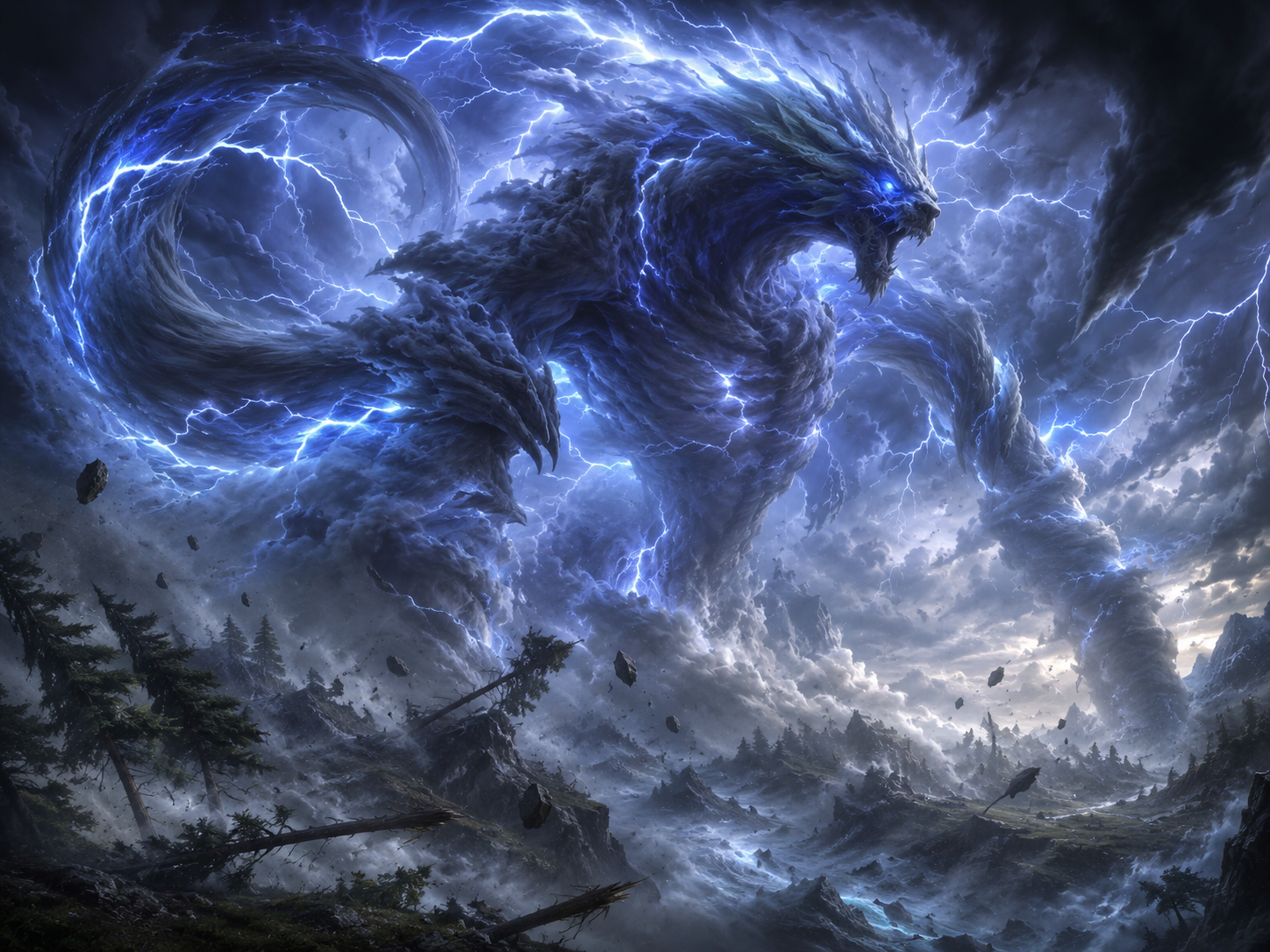
- Zephyronax appeared as a colossal being composed entirely of swirling winds and storm clouds. Its form was ever-changing, shifting and morphing in response to the currents and eddies of the air around it. Lightning danced across its form, crackling and sparking with raw elemental power. Its voice was a deafening roar, like the fury of a hurricane, and its breath was a blast of gale-force winds that could topple buildings and uproot trees.
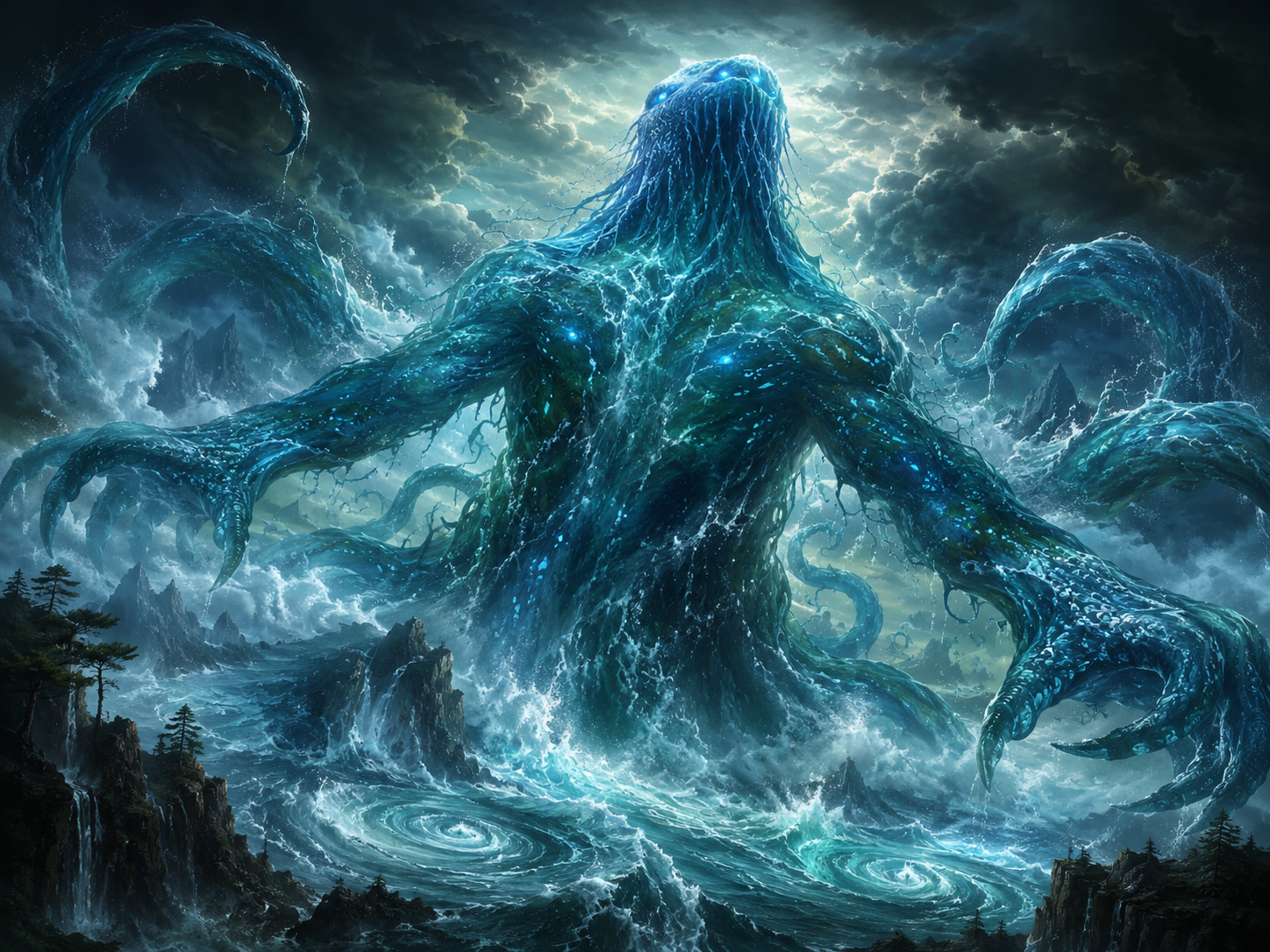
- Aquarion was an immense titan whose body was comprised of living water, constantly in motion and shimmering with a myriad of colors. It had multiple long, serpentine arms that extended outwards from its massive torso and ended in webbed fingers that could manipulate the currents of the ocean. Its face was featureless, and its eyes glowed a faint blue, giving the impression of an otherworldly intelligence. As it moved through the water, it left behind a trail of swirling eddies and small whirlpools that could easily swallow up ships or drag swimmers to their doom.
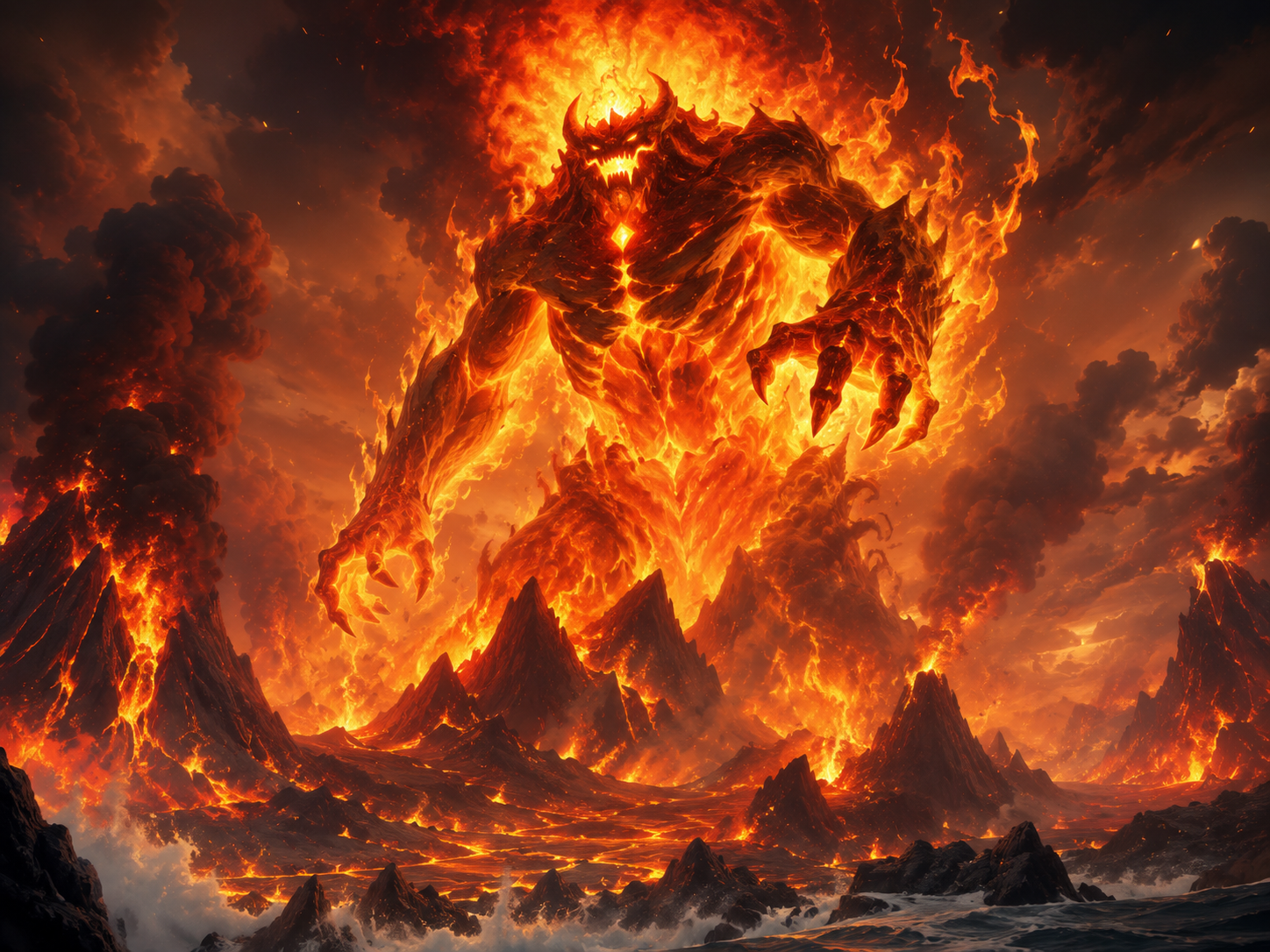
- Pyrothar appeared as an enormous, fiery figure, towering over the landscape. He was made entirely of flames, with molten lava pouring from his eyes and mouth. His body was constantly shifting and changing shape, like a constantly burning inferno. His presence was accompanied by intense heat, and even from a distance, one could feel the heat emanating from his form.
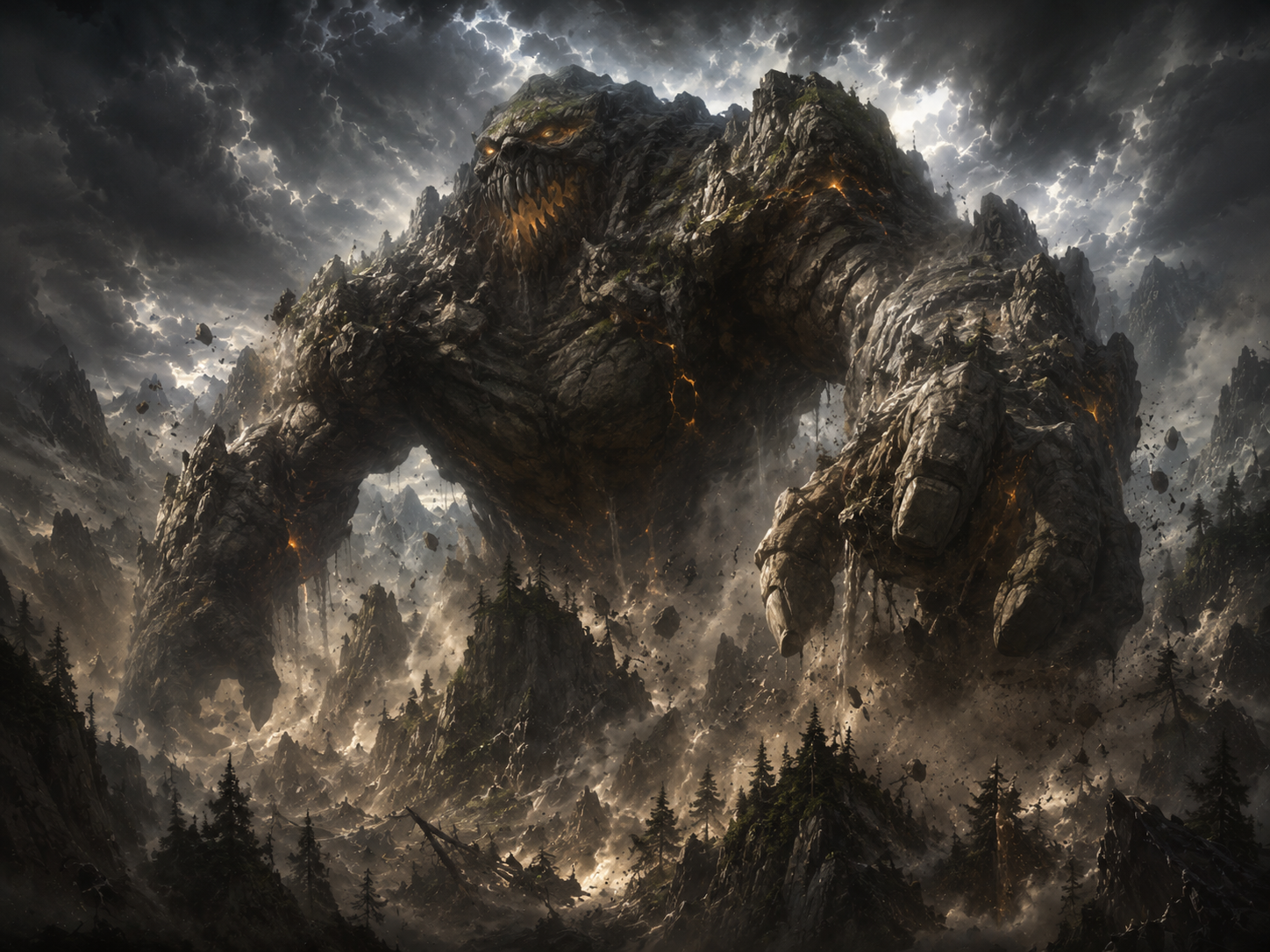
- Terragor was an immense titan that embodied the elemental powers of earth. Its massive form was made entirely of jagged rock and earth, and it towered over even the largest of mountains. Its body was covered in deep crags and crevices, and its glowing eyes burned with an intense inner fire. Terragor had a deep, rumbling voice that shook the very ground with every word, and it was said that the very mountains themselves trembled at the sound of its footsteps.
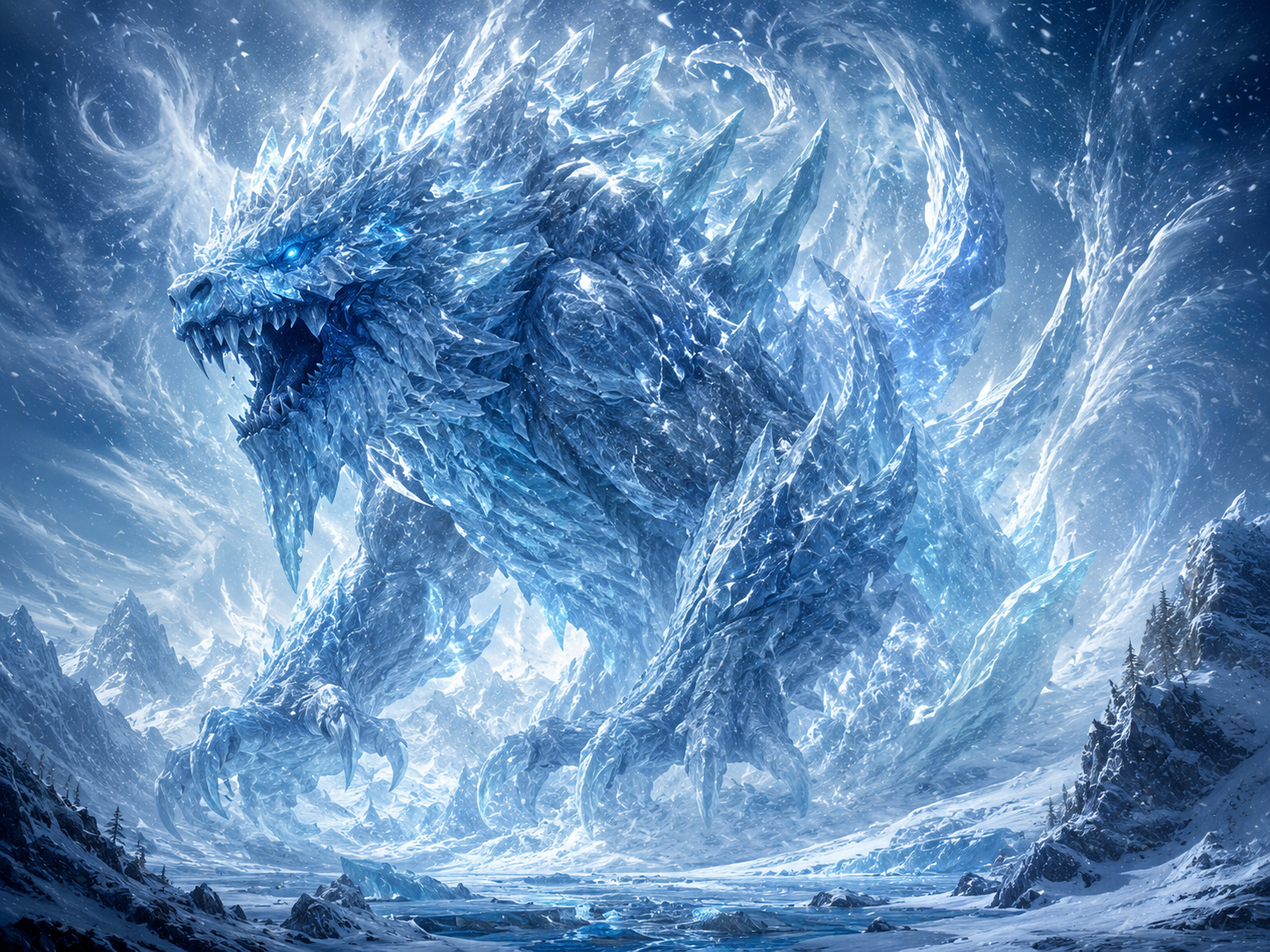
- Glaciora has an imposing figure. Its body is made entirely of ice and frost, giving off a chilling aura that can freeze the air around it. Glaciora's eyes are glowing blue, with a fierce intelligence that reflects the frigid landscape it inhabits. Its movements are smooth and graceful, as if it is constantly gliding on the ice and snow. Despite its cold exterior, Glaciora is an incredibly powerful entity, able to summon blizzards and ice storms at will, and freeze anything it touches with just a thought.
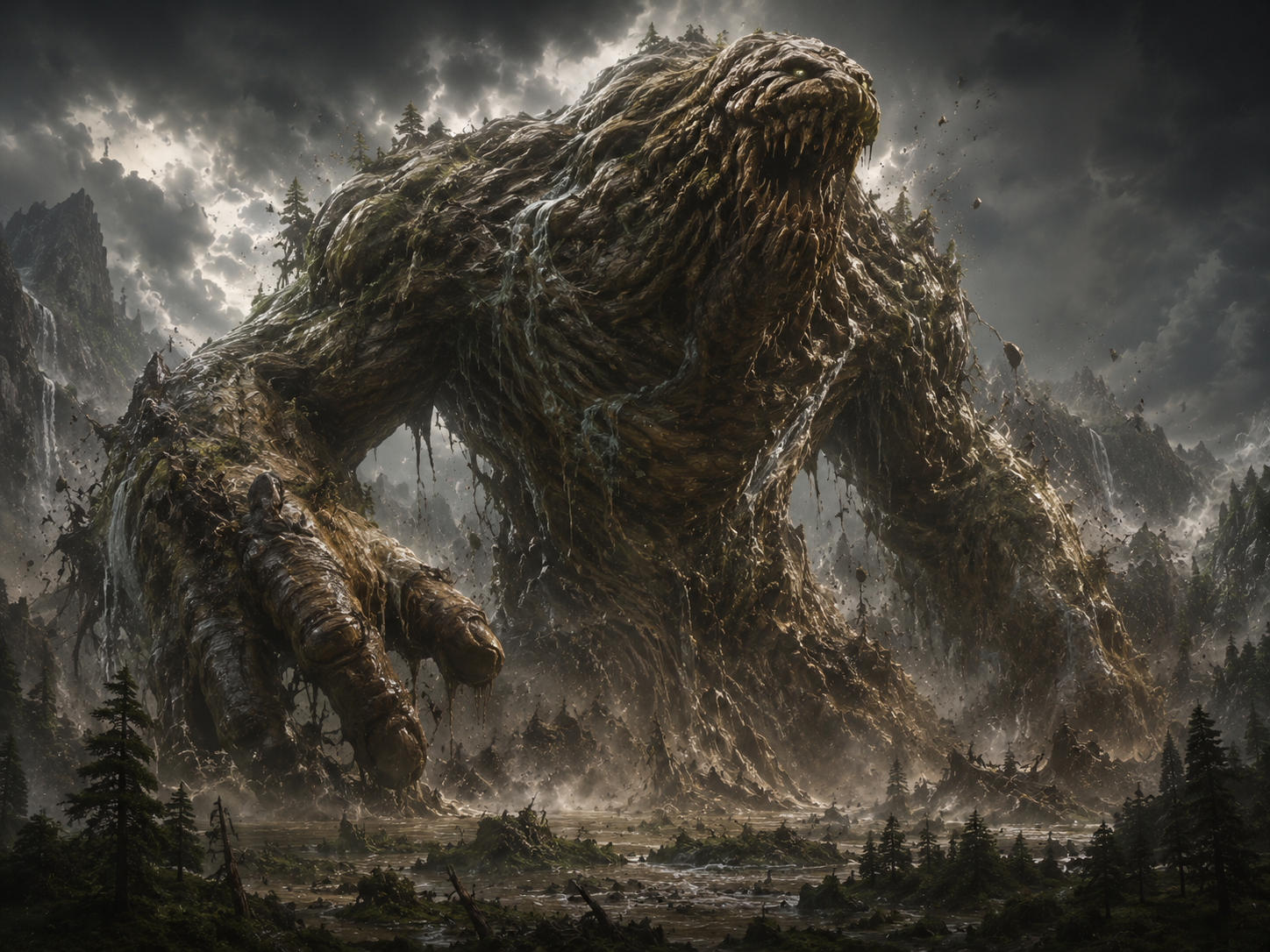
- Solumire was a massive, hulking titan composed of the elements of mud, water, and earth. Its body was a swirling mass of brown and green, with thick, viscous mud oozing from its pores. Its arms were massive, with thick, trunk-like appendages that it used to smash and crush its enemies. Solumire had a slow, lumbering gait, but its strength was unparalleled among the primordial titans. Its eyes were deep-set and filled with a dull, malicious intelligence that seemed to know no mercy.
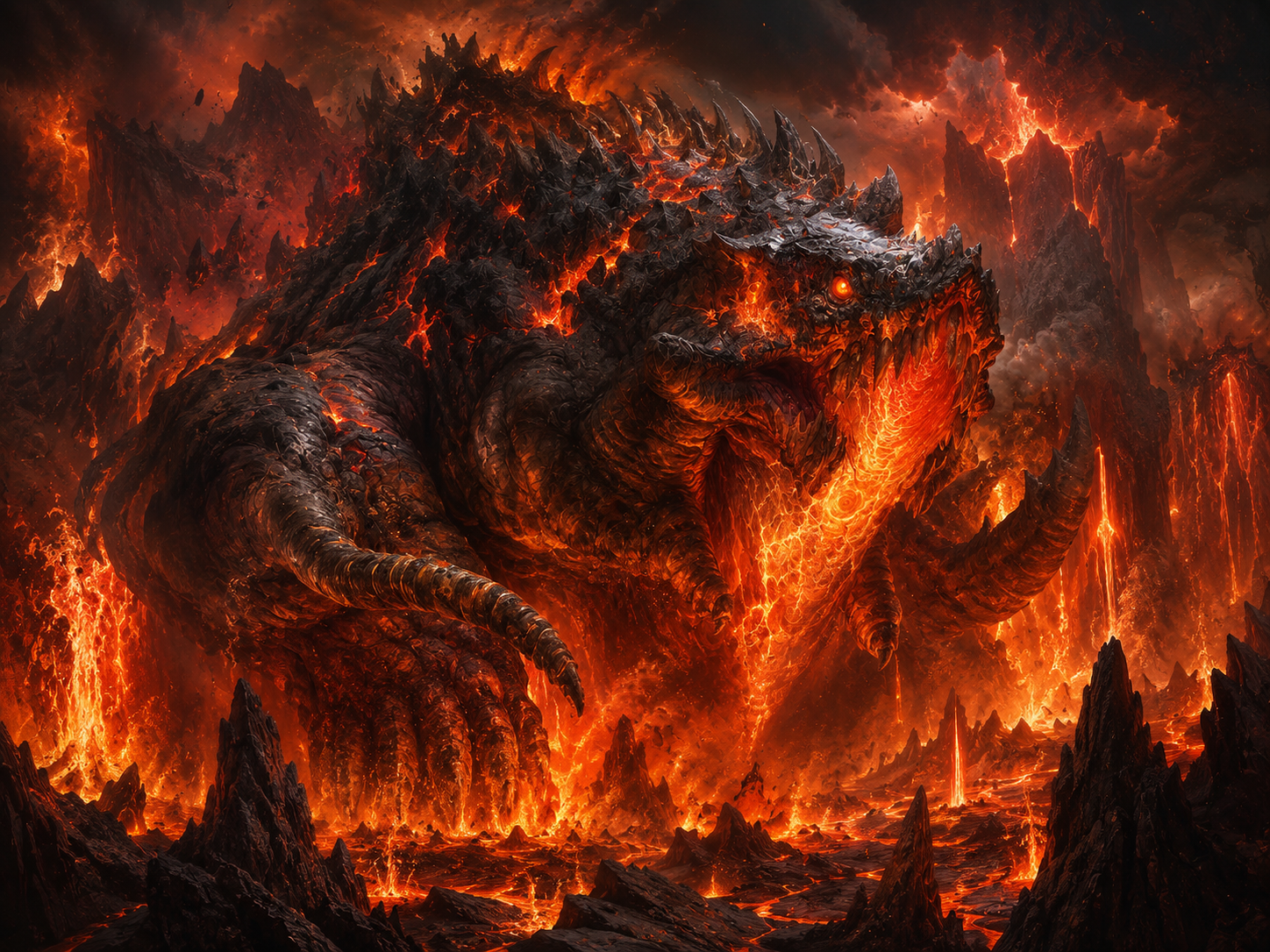
- Magmokar is a titanic being that embodies the fiery depths of the earth. It is a massive creature made of molten rock and magma that glows with an intense heat. Its surface is constantly shifting and flowing as the magma churns within it. Its eyes are made of molten lava, and its movements cause fiery eruptions and geysers. The heat it radiates is enough to melt even the toughest materials, and its presence is often accompanied by the sound of rumbling and earthquakes.
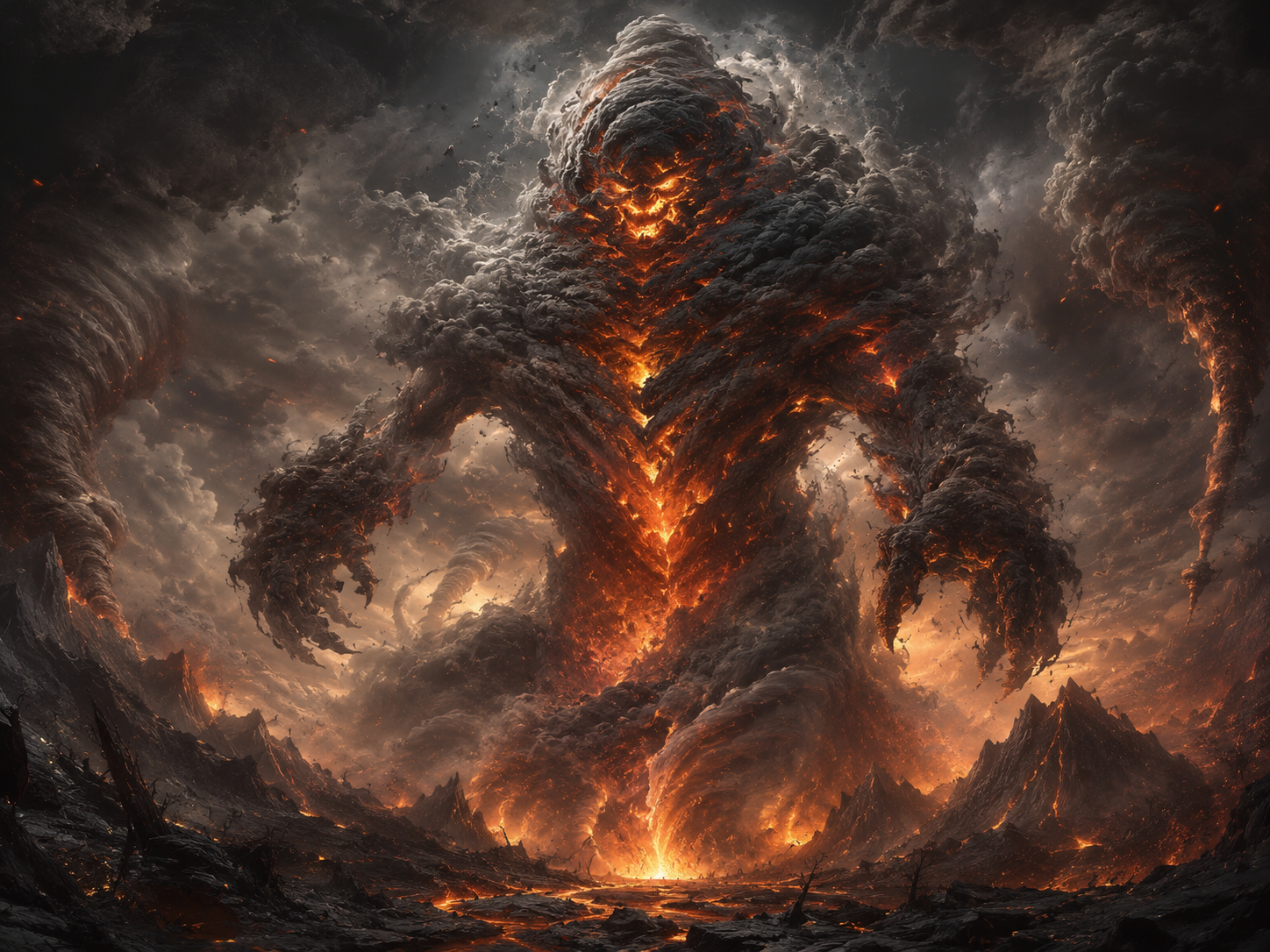
- Cinereus was a titan born of the combination of fire and air. Its appearance was that of a massive swirling vortex of dark gray ash and soot, constantly churning and crackling with flames. The ash and soot swirled around a central core of intense heat, causing it to glow red-hot. Cinereus was known for unleashing massive ash clouds and fiery tornadoes upon the world, leaving destruction and devastation in its wake. Its presence was often accompanied by the smell of smoke and burning embers.
Battle of Elemental Convergence
The Battle of Elemental Convergence was a pivotal moment in the conflict between the Divine Alliance and the primordial elemental titans. It marked a turning point in the struggle, as the gods and their allies fought together against the combined might of the titans and their elemental minions.
- The Convergence: The battle took place at a location where the energies of all four elemental planes converged, creating a nexus of elemental power. This place, known as the Elemental Crucible, was chosen by the titans as their stronghold, believing that the combined elemental energies would amplify their powers and make them invincible.
- Gathering of Forces: Aware of the titans' plan, the Divine Alliance rallied their celestial armies, and other supernatural allies to join them in the battle. The gods knew that they would need every bit of strength they could muster to defeat the titans and their elemental minions.
- Opening Assault: The battle commenced with a surprise attack by the gods and their allies. Oxdros, God of the Sky, led the aerial assault, while Sedarr, God of the Sea, commanded the aquatic forces. The ground troops, composed of celestial beings, and other creatures, were led by various gods, including Rildir, God of Tranquility, and Tiseyr, God of Sleep.
- Elemental Chaos: As the battle raged on, the titans unleashed the full might of their elemental powers, creating a maelstrom of fire, ice, wind, and earth. This chaos tested the limits of the gods and their allies, but their unity and perseverance kept them from being overwhelmed.
- Divine Intervention: As the tide of battle seemed to turn against the gods, the Divine Alliance enacted a desperate gambit. The gods of magic, Hykteus and Yxtuna, along with others skilled in arcane arts, worked together to cast a powerful spell that temporarily weakened the connection between the elemental titans and the elemental planes. With the titans weakened, the gods pressed their advantage and struck decisive blows against their foes.
- Turning the Tide: With the titans reeling from the gods' coordinated assault, the Divine Alliance began to turn the tide of battle. In time, the Elemental Crucible was destroyed, and the titans scattered across the world.
- Aftermath: The Battle of Elemental Convergence marked a significant victory for the Divine Alliance, but it was not the end of their struggle against the primordial elemental titans. The gods would go on to face the titans in several more confrontations, ultimately imprisoning them deep within Andórë and ensuring the safety of the world.
The Battle of Elemental Convergence showcased the power of unity and cooperation among the gods and their allies, and its outcome played a crucial role in the eventual victory over the primordial elemental titans.
The Elemental Sundering
The Elemental Sundering was a cataclysmic event that took place during the imprisonment of the primordial elemental titans by the Divine Alliance. As the gods sealed away the titans' powers, the immense elemental energies within the titans were released in a violent, chaotic manner, tearing apart the fabric of Andórë and reshaping the world.
- Unstable Imprisonment: As the gods imprisoned each of the elemental titans, the powerful magic they used to contain them also caused the titans' elemental energies to become volatile and unstable. The gods knew that this energy had to be released in a controlled manner to prevent even greater devastation.
- The Elemental Demi-Planes: As the titans were too powerful to banish back to their home elemental planes, the gods created elemental demi-planes to act as prisons. These demi-planes were housed deep within the core of the planet, and were used to absorb the excess energy of the titans.
- The Release: With the elemental demi-planes ready to receive the excess energy, the gods initiated the process of releasing the elemental energies as they imprisoned titans. This controlled release was known as Elemental Sundering.
- Elemental Sundering: As the elemental energies were released, they surged throughout Andórë, causing massive earthquakes, volcanic eruptions, storms, and floods. The very fabric of reality was strained as the elemental forces tore through the world, reshaping the landscape and altering the natural balance of the elements.
- New Landscapes: Each Elemental Sundering had a profound and lasting impact on Andórë. Entire continents shifted, mountain ranges rose and fell, and vast deserts and forests appeared where none had existed before. The chaos of the Sundering forever changed the face of the world, creating new environments and ecosystems for the mortal races to inhabit.
- Elemental Rifts: The Elemental Sundering also left behind a series of rifts that connected the material plane of Andórë to the previously existing elemental planes. These rifts, while mostly sealed by the gods, allowed for the occasional leakage of elemental energy into the world, creating areas of elemental influence and giving rise to various elemental creatures.
- The Aftermath: The Elemental Sundering marked the end of the Primordial Age and the beginning of a new era for Andórë. The mortal races, who had not yet been created or were in their infancy, would now find themselves in a world that was both dangerous and filled with untapped potential. The gods, having saved the world from the elemental titans, would continue to watch over Andórë and guide the development of the mortal races in the ages to come.
Epic Battles
There were several epic battles in the war between the gods and the titans. A few are detailed here.
Tuulla and Aquarion, the Endless Depths:
The battle between Tuulla, the Goddess of Seasons, and Aquarion, the Endless Depths, was a fierce contest between the relentless forces of water and the ever-changing power of the seasons. Aquarion summoned torrents of water, immense tidal waves, and crushing whirlpools to overpower Tuulla, who countered with the strength of winter's cold, the rejuvenation of spring, the heat of summer, and the decay of autumn. As the waters raged, Tuulla's seasonal powers shifted the battle, freezing Aquarion's waves, evaporating them with summer's heat, or summoning storms to churn the seas. Ultimately, Tuulla's mastery over the seasons allowed her to wear down Aquarion, until she was able to imprison him within the newly created plane of water.
Oxdros and Zephyronax, the Howling Tempest:
Oxdros, the God of the Sky, faced off against Zephyronax, the Howling Tempest, in a battle that took place high above Andórë, where the winds roared and lightning crackled. Zephyronax unleashed powerful gusts, cyclones, and lightning storms in an attempt to overwhelm Oxdros. However, Oxdros, as the master of the sky, harnessed the power of the wind to his advantage, maneuvering effortlessly through the tempest and using his divine power to redirect Zephyronax's lightning strikes. As the battle raged, Oxdros gradually gained the upper hand by dispersing Zephyronax's storms and calming the howling winds. Eventually, Oxdros bound Zephyronax within the plane of air, sealing away his destructive power.
Sedarr and Pyrothar, the Eternal Blaze:
In a battle of fire and water, Sedarr, the God of the Sea, confronted Pyrothar, the Eternal Blaze. As the embodiment of fire, Pyrothar scorched the land, creating rivers of lava and summoning walls of flame to engulf Sedarr. Yet the God of the Sea remained undeterred, summoning the full force of the ocean to quench Pyrothar's flames. Massive waves crashed against the fire, and steam billowed from their meeting, shrouding the battlefield in a thick, obscuring fog. Sedarr's relentless assault of water slowly weakened Pyrothar, and with one final, monumental wave, Sedarr extinguished the Eternal Blaze and imprisoned him within the plane of fire.
Rildir and Terragor, the Unyielding Mountain:
The battle between Rildir, the God of Tranquility, and Terragor, the Unyielding Mountain, was a contest of endurance and persistence. Terragor summoned massive earthquakes, avalanches, and rockslides in an effort to crush Rildir beneath the weight of the earth. Rildir, however, remained steadfast and calm in the face of such chaos, relying on his power over tranquility to weather the onslaught. He softened the ground to absorb the force of the earthquakes and quelled the avalanches and rockslides with gentle breezes. As the battle wore on, Rildir's tranquil demeanor and unwavering patience gradually weakened Terragor's resolve, and eventually, Rildir was able to pacify the Unyielding Mountain and imprison him within the plane of earth.
Deaths of Gods
The Battle of Shadows and Ash: Verlanis and Cinereus, the Smoldering Gale
Verlanis, the God of Shadows, confronted Cinereus, the Smoldering Gale, in a harrowing battle of darkness and ash. As the battlefield was blanketed in a haze of smoke, the two fought a duel of stealth and surprise. Verlanis, ever elusive, used the shadows to his advantage, striking Cinereus from the cover of darkness. Meanwhile, Cinereus, the personification of ash and fire, created choking clouds of embers and sent searing gusts of wind to scorch the shadows and reveal his foe.
Realizing that a direct confrontation would be too dangerous, Verlanis devised a plan to bind Cinereus in a magical prison, harnessing the power of shadows to weaken and contain him. However, as Verlanis began the intricate ritual to create the prison, Cinereus sensed his intent and mustered his full strength for one final, devastating attack.
Unleashing a violent whirlwind of ash and fire, Cinereus engulfed Verlanis, disrupting the ritual and mortally wounding the God of Shadows. Although Verlanis was ultimately slain, his fellow gods managed to complete the ritual and imprison Cinereus, ensuring his sacrifice was not in vain.
The Battle of Hope and Magma: Elumis and Magmokar, the Blazing Depths
Elumis, the Goddess of Hope, found herself facing Magmokar, the Blazing Depths, in a battle of determination and fiery destruction. As Magmokar unleashed torrents of magma and sent molten rocks crashing down upon the battlefield, Elumis remained a beacon of hope, bolstering the resolve of her allies and mending their wounds.
Recognizing that the goddess's presence posed a significant threat, Magmokar focused his rage upon Elumis, unleashing a cataclysmic eruption of lava and fire aimed directly at her and her divine comrades. In this desperate moment, Elumis made the ultimate sacrifice.
Channeling her divine power, Elumis manifested a barrier of hope and light, shielding her allies from the searing inferno. As the molten fury crashed against her barrier, Elumis's form began to waver, the intensity of the attack threatening to overwhelm her. Yet, even as her strength faded, Elumis's light never faltered, her sacrifice becoming a testament to the power of hope.
With their goddess's final act of selflessness, Elumis's allies rallied, their resolve and determination renewed. Inspired by her sacrifice, they pressed on, ultimately capturing and imprisoning Magmokar, the Blazing Depths, and bringing an end to the Elemental Sundering.
Final Imprisonment
To imprison the defeated elemental titans within the firmament of Andórë, the gods devised a complex plan that required the combined efforts and powers of the entire pantheon. They understood that the elemental titans were too powerful to be destroyed, and so they sought to bind and contain them, preventing their destructive influence from harming the world.
- Creation of the Prisons: First, the gods designated specific locations deep within Andórë to serve as the prisons for each elemental titan. They chose these locations based on the elemental affinity of each titan, ensuring that their imprisonment would be secure and stable. For example, Terragor, the Unyielding Mountain, was imprisoned within the heart of the largest mountain range, while Aquarion, the Endless Depths, was sealed beneath the depths of the vastest ocean.
- Construction of the Wards: The gods worked together to create powerful magical wards, specifically designed to counteract the elemental nature of each titan. These wards were imbued with divine energy, making them incredibly potent and resilient. The gods then placed these wards around the designated prison locations, creating a barrier that the titans could not breach.
- Binding Rituals: With the prisons and wards in place, the gods performed a series of complex binding rituals to transfer the defeated elemental titans from their battlefields to their respective prisons. These rituals required the gods to pool their divine power and maintain absolute focus, as any mistake could have allowed the titans to escape or even retaliate.
- Eternal Vigilance: To ensure the continued imprisonment of the elemental titans, the gods appointed several of their own celestial servants to stand guard over the wards and watch for any signs of weakening or potential escape.
- With the elemental titans securely imprisoned deep within the world of Andórë, the Primordial Age came to an end. The gods then turned their attention to the formation of the world heralding the beginning of a new era for Andórë.